
Selecting solar panels for your home is a big result, particularly in a country like India, where heat, dust, monsoons, and humidity can take a toll on equipment.
If you’re speculating how to pick durable solar panels for your home in India, you’re in the right place. This guide walks you through every aspect that matters, helping you feel self-assured in your investment.
Understanding Solar Panel Durability in India’s Climate
Impact of Heat, Dust, and Humidity
India faces really hot summers where temperatures routinely touch 45°C. High heat can reduce solar panel output, particularly if the panel has a poor temperature coefficient. Dust accumulation is also a chief problem in dry states like Rajasthan and Gujarat. Meanwhile, coastal states face hefty humidity and salt corrosion.
Importance of Long-Term Structural Strength
Durability isn’t just about longevity, it’s about consistent performance despite harsh conditions. Panels must have a strong frame, tempered glass, and anti-corrosion coatings to endure storms and monsoon cycles.
Types of Solar Panels Best Suited for Indian Homes
For residential applications in India, Monocrystalline and Polycrystalline panels are the most common options, each with distinct advantages.
Monocrystalline panels are usually preferred for Indian homes with limited rooftop space as they offer the highest efficiency (naturally 18–22%) and better performance in high temperatures and low-light conditions.
These panels, with their sleek, even black appearance, come at a higher initial cost but deliver greater energy output per square foot, leading to a potentially faster return on investment (ROI).
Conversely, Polycrystalline panels are a more budget-friendly choice, offering somewhat lower efficiency (around 15–17%) and are healthier suited for homes with plenty of rooftop space where maximizing cost savings over space efficiency is the priority.
Though less efficient, the overall cost-effectiveness, particularly with government subsidies, makes solar a lucrative long-term investment for most Indian households, with distinctive payback periods ranging from 4 to 7 years.
Monocrystalline Panels
These are the most efficient and durable, usually offering 20–25% efficiency. They accomplish well even during cloudy days and take up less roof space.
Polycrystalline Panels
More reasonable and widely obtainable across India. Though somewhat less efficient, they offer decent durability for moderate-budget homes.
Thin-Film Solar Panels
Lightweight but less durable and less effectual for residential use. They are hardly recommended for home rooftops in India.
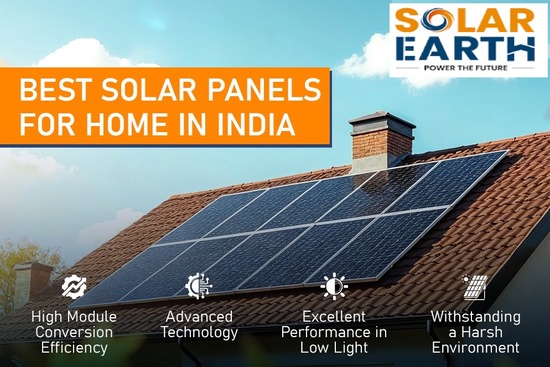
Key Factors to Evaluate When Choosing Durable Solar Panels
Choosing a sturdy solar panel for long-term return comprises evaluating numerous critical factors beyond just the preliminary efficiency. The product and performance warranty is supreme, with leading panels offering a 10-12 year product warranty and a 25-year performance warranty that assures minimal degradation (preferably < 0.5% annually).
Durability is established by international certifications like IEC and BIS, which safeguard that the panels have passed hard testing for resistance to harsh conditions, including high mechanical load ratings for wind/snow and resistance to Potential Induced Degradation (PID) from extreme heat and humidity.
Besides, a low Temperature Coefficient is vital, as it indicates the panel’s ability to uphold high performance in the high-temperature conditions widespread in India.
Efficiency Rating
Higher efficiency panels convert more sunlight into electricity. Aim for 18% or above for Indian homes.
Temperature Coefficient
This regulates how much power the panel loses as the temperature increases. A better coefficient means higher durability in India’s heat.
Build Quality & Frame Strength
Look for:
- Aluminium anodised frames
- Tempered safety glass
- Corrosion-resistant material
PID Resistance
Potential Induced Degradation (PID) affects long-term output. Select panels labelled as PID-resistant.
Understanding Solar Panel Certifications for India
BIS Certification
This is mandatory for solar panels sold in India.
IEC Standards
International certifications like:
- IEC 61215 (performance)
- IEC 61730 (safety)
MNRE Approvals
Panels permitted by the Ministry of New and Renewable Energy must meet strict quality standards.
How to Assess Panel Lifespan and Warranty
To assess the lifespan and warranty of a solar panel, you must separate between the two chief guarantees: the Product/Workmanship Warranty and the Performance Warranty.
The Product Warranty typically covers 10-12 years and protects against manufacturing defects such as physical failures, glass cracks, or junction box issues.
The more critical factor for long-term value is the Performance Warranty, which usually lasts 25 years and assures the panel’s power output will not fall below a detailed percentage (e.g., 80-85% of original capacity) by year 25.
The panel’s lifespan is straight related to its degradation rate, which for high-quality panels is around 0.5-0.7% per year; a lower rate means a longer actual life, as panels normally produce electricity for 25–30+ years, even after the warranty expires.
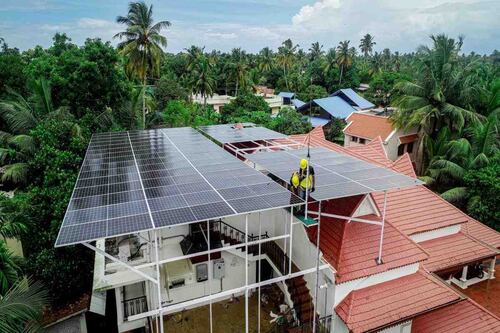
Product Warranty vs. Performance Warranty
- Product warranty: Covers physical defects (10–15 years).
- Performance warranty: Guarantees output levels (25 years).
Warranty Terms You Must Not Ignore
Always check the degradation rate, good panels degrade only 0.5% annually.
Choosing the Right Solar Inverter and Mounting Structure
Choosing the right solar inverter and mounting structure is vigorous for maximizing system competence and longevity. For the inverter, the chief choice is between a String Inverter (cost-effective, best for unshaded, uniformly-oriented roofs) and Microinverters or Power Optimizers (perfect for roofs with partial shading or different panel orientations, as they optimize each panel’s output independently).
You must safeguard the inverter’s capacity is suitably sized to the total panel wattage, maintaining an ideal DC-to-AC ratio (typically 1.1 to 1.3), and that it has a high efficiency rating (over 97%).
The mounting structure must be particular based on the roof type and space utility. Fixed-tilt structures are common for flat RCC roofs, elevating panels to the ideal angle for sun exposure and facilitating rooftop space use (like a garden) beneath.
Low fixed-tilt options use less metal and are suitable for roofs with minimal wind load, while ballasted mounts are an alternative for flat roofs where roof penetration is undesirable, though they require more surface area.
Significantly, the structure must be made of high-quality, corrosion-resistant materials like galvanized or anodized steel to endure local weather conditions and ensure 25+ years of stability.
Role of Inverters in Durability
Even the best panels underperform if paired with a low-quality inverter. Look for MPPT technology and high efficiency levels.
Corrosion-Resistant Mounting Frames
Particularly significant in coastal areas. Galvanized steel or aluminium is ideal.
Best Solar Panel Brands in India Known for Durability
Leading Indian Manufacturers
- Tata Power Solar
- Vikram Solar
- Waaree Energies
International Brands
- JA Solar
- Trina Solar
- Canadian Solar
These brands have strong reliability records and robust manufacturing standards.
Cost vs. Durability—Finding the Right Balance
Price Brackets for Quality Panels
Expect:
- Polycrystalline: ₹25–32 per watt
- Monocrystalline: ₹30–45 per watt
Long-Term ROI Analysis
Durable panels may cost more upfront but deliver higher savings and lower maintenance.
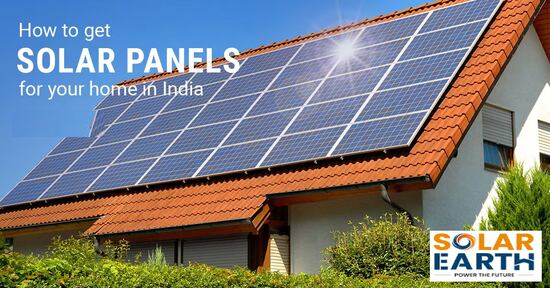
Installation Quality of Solar Panel and Why It Matters for Durability
Installation quality is just as decisive as the panel’s quality, directly affecting system durability, efficiency, and safety. Poor mounting can put unnecessary mechanical stress on panels, possibly causing micro-cracks that reduce efficiency and lead to hasty failure, issues that may void the manufacturer’s warranty.
Likewise, substandard electrical wiring and connections can lead to noteworthy energy losses, fire hazards, and system malfunctions. A specialized installation ensures panels are steadily fixed to withstand high winds and heavy rainfall, suitably tilted for optimal solar exposure, and uses correct cable management and weatherproofing to avert water ingress and corrosion, guaranteeing the system’s projected 25-year lifespan and maximizing your return on investment.
Importance of Certified Installers
Poor installation can reduce panel lifespan by years.
Common Mistakes to Avoid
- Incorrect tilt angle
- Weak mounting structure
- Poor wiring
Maintenance Tips to Improve Solar Panel Lifespan
Simple regular cleaning is the most impactful maintenance step, as dust, dirt, and bird droppings can decrease energy output by up to 20% or more; cleaning panels mildly with water and a soft cloth every 3-6 months is usually recommended, especially in dusty Indian climates.
Beyond cleaning, visual inspections should be conducted frequently to check for physical damage (like cracks or loose wiring), signs of corrosion on the mounting structure, or animal/pest activity underneath the panels, which can compromise safety and performance.
Finally, consistent performance monitoring via the inverter’s app is vigorous, as a sudden or gradual drop in expected energy generation is the earliest sign of a tricky requiring specialized attention and an annual system checkup.
Cleaning Frequency
Dusty areas need cleaning every 2–4 weeks.
Monitoring and Troubleshooting
Use app-based monitoring to detect issues early.
Environmental Considerations in India
Extreme Heat and Monsoons
Panels must withstand:
- Heavy rainfall
- Strong winds
- Prolonged heat waves
Performance in Different States
Monocrystalline panels perform better in:
- Maharashtra
- Tamil Nadu
- Karnataka
- Rajasthan
Common Myths About Durable Solar Panels
Myth 1: Heavier Panels Are Always Better
Weight does not guarantee durability.
Myth 2: Higher Price Means Higher Durability
Always check certifications, not just price.
Comparison Table
| Feature | Monocrystalline | Polycrystalline | Thin-Film |
| Efficiency | ⭐⭐⭐⭐⭐ | ⭐⭐⭐⭐ | ⭐⭐ |
| Durability | High | Medium | Low |
| Lifespan | 25+ years | 20+ years | 10–12 years |
| Cost | High | Medium | Low |
FAQs: How to Pick Durable Solar Panels for Your Home in India
-
Which type of solar panel is most durable for Indian homes?
Monocrystalline panels are the most durable due to better heat resistance and higher efficiency.
-
How do I know if a solar panel is certified in India?
Check for BIS and IEC certifications on the label.
-
Do durable panels need frequent cleaning?
Yes, particularly in dusty regions. Clean every 2–4 weeks.
-
Which solar panel brands last the longest?
Brands like Tata Solar, Trina, and JA Solar have strong durability records.
-
What is the minimum warranty I should look for?
At least 10 years product warranty and 25 years performance warranty.
-
Are monsoon rains harmful to solar panels?
Not if the panels are certified and installed properly.
In Conclusion:
Knowing how to pick durable solar panels for your home in India helps you make a smart, long-lasting investment. Focus on efficiency, certifications, build quality, warranties, and proper installation. A durable system not only saves money but also ensures reliable power for decades.


