
India’s rapid shift toward renewable energy has made solar power one of the most prevalent selections for homes and businesses. But with rising electricity prices, recurrent outages, and growing demand for backup power, many people now desire hybrid solar systems over traditional on-grid or off-grid solutions.
A hybrid solar system not only produces electricity from sunlight but also stores extra energy in batteries while remaining connected to the utility grid. This gives you the best of all worlds: savings, storage, and stability.
In this comprehensive guide, you’ll learn how hybrid solar systems work, why they’re becoming the top choice in India, how much they cost, and how you can maximize your solar savings.
What is a Hybrid Solar System in India?
A hybrid solar system in India is an advanced power setup that tactically combines solar panels, battery storage, and a connection to the utility grid.
This system uses solar energy to power a home or business, stores any surplus electricity generated in batteries for use at night or during power cuts, and can also draw power from or send leftover power back to the grid.
This combination confirms a reliable, continuous power supply, which is decidedly beneficial in regions of India prone to frequent power outages, while also reducing electricity bills by maximizing the use of self-generated solar energy.
A hybrid solar system syndicates the features of both on-grid and off-grid solar systems. It works in three modes:
- Solar Power Supply – Solar panels generate electricity during the day.
- Battery Charging – Excess energy gets stored in powerful solar batteries.
- Grid Support – If both solar and battery power run out, the system automatically uses electricity from the grid.
This three-way balancing makes hybrid systems efficient, flexible, and reliable.
Why Hybrid Solar Systems Are Gaining Popularity in India
Hybrid solar systems are quickly growing in popularity in India chiefly due to their ability to provide continuous power, combining the benefits of on-grid and off-grid setups. In a country where frequent power cuts (load shedding or blackouts) are common, the battery backup safeguards vital appliances from running, offering energy security that traditional grid-tied systems lack.
Furthermore, these systems permit homeowners and businesses to maximize cost savings by utilizing solar energy during the day, storing the surplus for use at night to avoid peak-hour grid tariffs, and often still being eligible to sell excess power back to the grid (net metering). This versatility makes them the perfect solution for achieving energy independence and a reliable electricity supply.
India’s electricity challenges make hybrid systems extremely valuable:
- Power cuts in rural and semi-urban areas
- Rising electricity tariffs in metros
- High evening consumption, especially during summer
- Increased need for backup for appliances like fridges, ACs, and routers
- More people working from home, needing uninterrupted power
With hybrid solar, households relish smooth power flow irrespective of weather or grid outages.
Key Components of a Hybrid Solar System
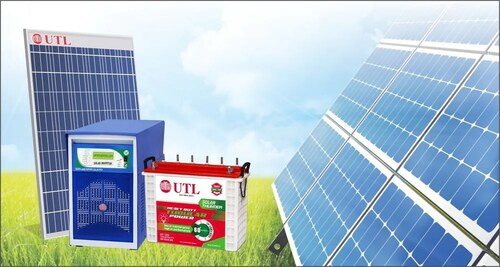
The key components of a hybrid solar system are the Solar Panels (PV array), the Hybrid Inverter, and the Battery Storage system.
The key components of a hybrid solar system are the Solar Panels (PV array), which convert sunlight into DC electricity, the Hybrid Inverter, which acts as the system’s “brain” by converting power and logically managing the flow between the panels, batteries, and the grid, and the Battery Storage system, which saves surplus solar energy for consistent use at night or during power outages.
A complete hybrid solar setup includes:
- Solar panels (Mono PERC, TOPCon, or Polycrystalline)
- Hybrid inverter
- Solar batteries (mostly lithium-ion or tubular gel)
- Solar mounting structures
- Battery management system (BMS)
- DC/AC protection devices
Each part plays a vital role in ensuring efficiency and safety.
Top Benefits of Hybrid Solar Systems in India
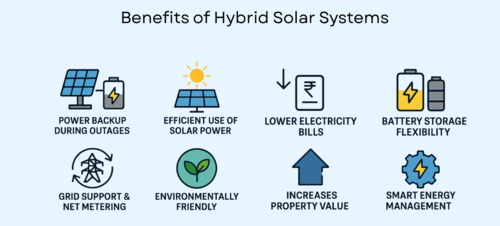
The top benefits of hybrid solar systems in India centre on achieving whole energy security and financial optimization. They deliver continual power during the frequent grid outages or blackouts common across India, ensuring vital appliances remain operational using stored battery energy.
This unified operation offers a chief benefit over traditional on-grid systems, which shut down when the primary power is lost.
Besides, hybrid systems permit users to maximize savings by using the battery to store additional daytime solar energy and discharge it at night or during peak-tariff hours, meaningfully reducing dependence on expensive grid electricity while still being clever to export surplus power back to the utility grid for credit (Net Metering).
Let’s explore how hybrid solar systems help you save money, enjoy backup power, and improve energy independence.
-
Power Backup During Outages
One of the strongest benefits of hybrid solar systems is instant backup.
When the grid goes down:
- Solar panels supply power (if it’s daytime)
- Batteries take over the moment solar output drops
- Essential appliances stay ON without interruption
This makes hybrid systems perfect for:
- Homes
- Shops
- Clinics
- Co-working spaces
- Small offices
You no longer need noisy, polluting generators.
-
Huge Savings on Electricity Bills
Hybrid systems help reduce electricity bills by:
- Using solar energy during the day
- Using stored power during the evening
- Minimizing grid consumption during peak hours
- Reducing reliance on expensive diesel generators
A typical Indian family can save ₹2,000 to ₹7,000 per month depending on system size and usage.
-
Use Solar Energy Even at Night
Unlike standard grid-tied systems, hybrid systems store surplus daytime energy for night-time use.
This reduces dependence on the grid by up to 70–90%.
For families with heavy night-time consumption (ACs, washing machines, TVs), hybrid systems are much more cost-effective.
-
Works Even When Net Metering Isn’t Available
Many Indian states have:
- Complex net-metering approvals
- Long approval timelines
- Export limitations
Hybrid systems let you store extra energy instead of exporting it. You don’t need net metering to maximize your solar benefits.
-
Protects Appliances from Voltage Fluctuations
Hybrid inverters stabilize voltage before sending electricity to appliances.
This protects sensitive equipment like:
- Laptops
- Refrigerators
- Smart TVs
- Routers
- Inverters ACs
Voltage stabilization increases the lifespan of home appliances.
-
Environment-Friendly and Low Maintenance
Hybrid solar systems run on:
- Clean energy
- No noise
- No harmful emissions
Compared with diesel generators, hybrid systems have:
- 0 fuel cost
- 0 air pollution
- 0 sound pollution
- Minimal maintenance
Once installed, they work seamlessly for 10–15 years.
How Much Does a Hybrid Solar System Cost in India?
The cost of a hybrid solar system in India is significantly higher than a standard on-grid system, mainly due to the inclusion of the battery storage system and the specialized hybrid inverter. The price can range around from ₹75,000 to ₹1,20,000 per kilowatt (kW), depending on the system’s size and components.
For instance, a residential 5 kW hybrid system naturally costs between ₹3,80,000 and ₹7,50,000, with chief factors influencing the final price being the type and capacity of the battery (Lithium-ion is more expensive but lasts longer than Lead-Acid), the brand and competence of the panels, and the complexity of the installation.
However, residential hybrid systems are often qualified for the government subsidy (up to a fixed amount of ₹78,000 for 3 kW and above), which can aid reduce the primary investment.
Costs vary based on battery type, inverter capacity, and panel quality.
Approximate Pricing
| System Size | With Lithium Battery | With Lead-Acid Battery |
| 1 kW | ₹1.25 – 1.45 lakh | ₹85,000 – ₹1.1 lakh |
| 3 kW | ₹3.5 – 4.5 lakh | ₹2.2 – 2.9 lakh |
| 5 kW | ₹5.8 – 7.5 lakh | ₹3.5 – 4.8 lakh |
| 10 kW | ₹10 – 14 lakh | ₹7 – 9.5 lakh |
Lithium batteries are more expensive but last 3–5 times longer.
How to Maximize Savings with a Hybrid Solar System
To maximize savings with a hybrid solar system, the chief strategy is to prioritize self-consumption and engage in peak-hour load shifting. The brainy hybrid inverter should be organized to use stored battery power during the most expensive peak tariff hours (naturally evenings in India), rather than drawing high-cost power from the grid.
Moreover, owners should implement smart load management by running heavy appliances like washing machines and air conditioners during the daytime when the solar panels are generating maximum free power.
Steady maintenance, including cleaning the panels, is also vital to safeguard the system operates at peak productivity and maximizes overall energy harvest, thereby reducing the reliance on grid electricity.
Here are the best ways to get maximum output and savings:
-
Choose High-Efficiency Mono PERC or TOPCon Panels
These solar panels offer:
- Better performance in low-light
- Higher efficiency
- Longer lifespan
They produce 15–20% more energy than polycrystalline panels.
-
Use Lithium-Ion Batteries Instead of Lead-Acid
Lithium batteries:
- Last 10–15 years
- Charge faster
- Require zero maintenance
- Provide deeper discharge
- Offer higher safety and efficiency
They drastically improve system performance.
-
Install a Smart Hybrid Inverter
Advanced hybrid inverters can:
- Prioritize solar, battery, or grid
- Optimize battery charging
- Monitor energy flow
- Reduce wastage
- Protect appliances
This maximizes overall savings.
-
Optimize Daily Electricity Use
Shift major consumption to solar hours:
- Washing machine
- Water pump
- Dishwasher
- Electric cooker
This reduces battery usage and increases efficiency.
-
Use a Smart Energy Monitoring App
Most hybrid systems come with mobile apps.
You can track:
- Solar production
- Battery charging
- Grid usage
- Daily/weekly savings
Real-time monitoring helps you fine-tune usage patterns.
Hybrid Solar Systems: Ideal for Homes & Businesses
Hybrid solar systems are the perfect energy solution for both homes and businesses in India because they flawlessly balance cost savings and energy reliability. For homes, the crucial battery backup safeguards nonstop power during frequent grid blackouts, offering peace of mind and comfort.
For businesses and industries, hybrid systems ensure operational steadiness and stop costly downtime by seamlessly providing power from the batteries when the grid fails.
Furthermore, both homes and businesses benefit from lower long-term electricity bills by storing and using solar power at night or during peak-rate hours, thereby maximizing the return on investment.
Hybrid solar systems benefit:
- Residential Homes
- Lower bills
- Backup during outages
- Long-term savings
- Small Businesses
- Uninterrupted operations
- Reduced generator cost
- Clinics & Pharmacies
- Stable power for medical equipment
- Shops & Retailers
- Keep lights, CCTV, and POS running
- Schools & Coaching Centers
- Continuous classes without power issues
Hybrid systems fit almost every use case in India.
Are Hybrid Solar Systems Worth It?
Hybrid solar systems are definitely worth the investment in India, especially for homes and businesses facing frequent or critical power outages. While they have a higher initial cost than standard on-grid systems due to the batteries, they offer unmatched energy security, ensuring essential appliances run seamlessly during blackouts.
In terms of financial returns, the payback period is typically longer than that of a simple grid-tied system (5-10 years compared to 3-5 years) because of the cost and eventual replacement of the batteries.
However, the system’s ability to maximize savings by avoiding high peak-hour grid tariffs and its eligibility for government subsidies can justify the extra cost for those who value uninterrupted power and true energy independence.
Yes, hybrid solar systems are absolutely worth the investment if you:
- Face power cuts
- Want backup + savings
- Want to reduce grid dependency
- Prefer clean, silent, low-maintenance power
- Want future-proof technology
The long-term financial and practical benefits outweigh the initial investment.
In Conclusion :
Hybrid solar systems are one of the smartest energy investments for Indian homes and businesses. They provide:
- Energy savings
- Power backup
- Stability
- Low maintenance
- Long lifespan
If you want a future-proof setup that works day and night, reduces bills, and protects your appliances, a hybrid solar system is an excellent choice.


