
India is racing toward a clean, self-reliant, and secure energy future, and at the heart of this transition lies one critical priority: domestic solar manufacturing. With electricity demand soaring and global supply chains increasingly unstable, understanding why India needs domestic solar manufacturing for energy security is more important than ever.
Solar power is already a game changer for India’s renewable energy landscape, but to fully unlock its latent potential, the nation must build its own robust ecosystem of solar equipment production from photovoltaic (PV) modules to inverters, wafers, and cells.
Let’s break down the reasons and explore the path forward.
Introduction to Why India Needs Domestic Solar Manufacturing for Energy Security
Energy security means having reliable, affordable, and uninterrupted access to power. As India aims to become a $5 trillion economy, growing its own clean energy capacity isn’t just an environmental necessity, it’s a strategic one. Domestic solar manufacturing ensures long-term stability and reduces the risks associated with dependence on foreign suppliers.
Understanding India’s Current Energy Landscape
India’s current energy landscape is in a dynamic transition, marked by a dual dependence on fossil fuels and a quick expansion of renewable energy. While coal remains the dominant source, accounting for the largest share of electricity generation, the country is aggressively pushing towards its goal of achieving 500 GW of non-fossil fuel capacity by 2030.
This push is led primarily by substantial growth in solar and wind power, with India now being a chief global contributor to renewable capacity additions. The key challenge is balancing this clean energy transition with the essential to meet ever-increasing energy demand driven by economic growth and urbanization, while also enhancing energy security and addressing the financial viability of its power distribution sector.
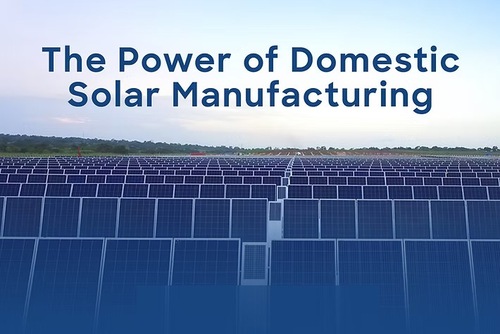
Heavy Dependence on Imported Fossil Fuels
India imports over 85% of its crude oil and a major portion of its natural gas and coal. This dependence exposes the country to price fluctuations and geopolitical tensions.
Rising Electricity Demand Across Sectors
From manufacturing to households, India’s energy consumption is increasing rapidly. Solar energy is one of the fastest ways to bridge this demand gap.
The Role of Solar Power in India’s Clean Energy Transition
Solar power is the keystone of India’s clean energy transition, driving the nation toward its ambitious climate goals. With installed solar capacity growing over 40-fold in the last decade to approximately 130 GW, it is the largest and fastest-growing segment of the renewable energy mix.
Solar is critical for meeting India’s Panchamrit targets announced at COP26, which include achieving 500 GW of non-fossil fuel capacity by 2030. Government initiatives like the PM Surya Ghar Yojana are accelerating adoption by installing rooftop solar systems for millions of households, promoting both utility-scale farms and decentralized, consumer-owned generation.
This shift not only reduces dependence on imported fossil fuels, enhancing energy security, but also helps India drastically cut its carbon intensity to meet its international commitments.
National Solar Mission Goals
India aims to install 500 GW of renewable energy capacity by 2030, with a massive portion coming from solar.
Solar Energy in Rural and Urban Development
Solar rooftops, solar pumps, and mini-grids are transforming how both rural and urban areas access clean and affordable electricity.
Why India Needs Domestic Solar Manufacturing for Energy Security
Building a fully integrated domestic solar manufacturing ecosystem is dominant for India’s long-term energy security and self-reliance, also known as Atmanirbhar Bharat.
Presently, India relies heavily on imports for key upstream components like solar cells, wafers, and polysilicon, which creates noteworthy vulnerability to global supply chain disruptions and geopolitical risks.
By incentivizing local production through schemes like the Production-Linked Incentive (PLI) scheme, India can secure a stable and consistent supply of solar equipment needed to meet its ambitious target of 500 GW of non-fossil fuel capacity by 2030.
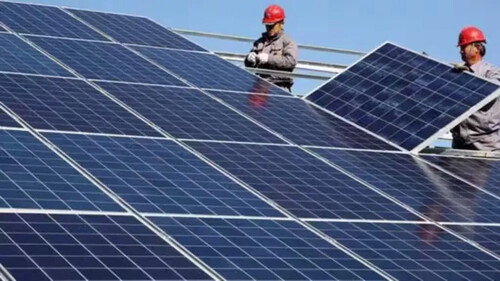
This domestic capacity also shields the country from volatile international prices, ensures a reliable supply for large-scale projects, and fosters job creation and technological advancement within the nation.
-
Reducing Reliance on Chinese Imports
Currently, India imports over 70% of its solar modules mostly from China. Local manufacturing reduces vulnerability to supply disruptions, trade restrictions, and price volatility.
-
Stable Supply Chain for Solar Equipment
Global events like COVID-19 and geopolitical tensions exposed the fragility of international supply chains. Domestic production ensures an uninterrupted supply for solar developers.
-
Strengthening National Energy Independence
Made-in-India solar components give India full control over pricing, quality, and availability, key pillars of energy security.
-
Boosting the Indian Economy and Job Creation
Domestic solar manufacturing can create:
- New factories
- Skilled jobs in engineering and assembly
- R&D hubs
This strengthens the economy and supports rural industrialization.
-
Lowering Solar Costs Through Local Production
Producing cells, modules, and inverters in India reduces import duties, logistics expenses, and currency risks, bringing down the cost of solar installations.
-
Encouraging Technological Innovation
Local manufacturing hubs promote:
- Research in advanced PV cells
- Improved solar efficiency
- Indigenous technology development
Innovation strengthens long-term competitiveness.
-
Supporting India’s Net Zero 2070 Mission
To achieve net zero, India must scale solar capacity rapidly. Domestic manufacturing ensures the supply needed for both large-scale and rooftop solar installations.
Key Government Initiatives Supporting Solar Manufacturing
PLI Scheme for Solar PV Modules
The Production-Linked Incentive (PLI) scheme encourages companies to build integrated manufacturing plants in India.
Make in India and Atmanirbhar Bharat
These initiatives aim to reduce imports and strengthen domestic capabilities in strategic sectors like renewable energy.
Challenges in Domestic Solar Manufacturing in India
India’s push for self-reliance in solar manufacturing faces numerous noteworthy challenges, primarily revolving around cost competitiveness and the upstream supply chain gap. Indian-made solar modules are often more expensive than imports, largely due to China’s dominant, cost-efficient, and fully-integrated manufacturing ecosystem, which benefits from economies of scale.
The chief bottleneck is India’s heavy reliance on imports for critical upstream components like polysilicon, ingots, and wafers, which are the fundamental raw materials for solar cells.
Developing this capital-intensive, high-technology segment from scratch requires huge upfront investment, overcoming technological gaps in high-efficiency cells, and securing a consistent supply of key materials. Furthermore, the domestic industry faces risks of oversupply and requires sustained policy support, like the PLI scheme and tariffs, to withstand aggressive global price pressure.
High Cost of Raw Materials
India still imports essential components like polysilicon and wafers, which impact production cost.
Need for Advanced R&D Facilities
To compete globally, India must invest heavily in research and technology development.
Case Studies: Countries Benefiting from Local Solar Manufacturing
China’s Global Dominance in PV Production
China became the world leader in solar manufacturing by building a strong domestic ecosystem, offering subsidies, and focusing on R&D.
The U.S. Solar Manufacturing Revival
The U.S. is reinvesting in local production to reduce dependence on imports and strengthen energy resilience.
How Domestic Solar Manufacturing Ensures Long-Term Energy Security
Impact on Grid Stability
A consistent supply of high-quality components improves the durability and stability of solar installations.
Reduced Geopolitical Vulnerability
Producing solar equipment domestically protects India from disruptions caused by international conflicts or trade wars.
Frequently Asked Questions
-
Why is solar manufacturing important for India’s economy?
It creates jobs, reduces imports, and grows local industries.
-
Does India produce enough solar panels?
Not yet, India is rapidly expanding its manufacturing capacity, but it still depends on imports.
-
How does domestic manufacturing improve energy security?
By ensuring stable access to affordable solar equipment without relying on global supply chains.
-
What government schemes support solar manufacturing?
PLI, Make in India, and Atmanirbhar Bharat are the biggest drivers.
-
Will domestic production reduce solar installation costs?
Yes, reduced logistics, import taxes, and currency risks lead to lower prices.
-
Can India become a global solar manufacturing hub?
With continued investment and policy support, India has the potential to lead globally.
In Conclusion :
Understanding why India needs domestic solar manufacturing for energy security reveals a clear truth: local production is not just beneficial, it’s essential. It protects the nation from import dependence, strengthens the economy, supports clean energy goals, and ensures long-term energy resilience.
With strong policy support and rapid industrial expansion, India is well on its way to becoming a global leader in solar manufacturing and energy security.


