
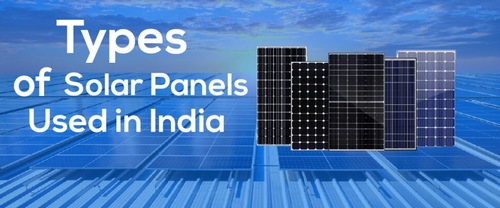
When choosing a solar panel in India, it’s essential to consider factors like efficiency, cost, and climate suitability. Monocrystalline solar panels are the most efficient and space-saving, making them ideal for areas with limited roof space but at a higher cost. Polycrystalline panels, though slightly less efficient, are more affordable and can still provide a great performance in sunny regions.
Type of Solar Panel Should You Choose in India
For those in areas with high humidity or saltwater exposure (like coastal zones), thin-film panels might be a better option, as they perform well in these conditions, although they have lower efficiency compared to the other types.
Additionally, it’s crucial to ensure the panels are certified for quality and durability to withstand India’s varying climates, from intense heat to monsoon rains. Choosing the right solar panels can feel a bit overwhelming, but it really comes down to what you want to achieve with your solar power system.
Rooftop Solar
If you’re looking to put solar panels on your house, you’ll generally find that monocrystalline panels are the most popular choice. They’re known for being highly efficient, which means you get more power from each panel. This is especially helpful if you have limited roof space.
However, if your roof is large and you’re working with a tighter budget, polycrystalline panels are a solid alternative. They’re a bit less efficient than monocrystalline panels, but they’re also more affordable upfront, helping you save money on the initial installation.
Portable Solar
Thinking about taking solar on the go for your RV, boat, or a DIY project? Thin-film solar panels are a fantastic option. They’re lightweight and flexible, making them perfect for portable setups where traditional rigid panels just won’t work.
Ultimately, the goal of solar technology has always been to make it more efficient, affordable, and durable. The good news is that today, there’s a perfect solar panel for just about any project you can dream up!
Here’s how to find solar panels that make the most sense for you. Out of the three types of solar panels, monocrystalline are the most efficient, polycrystalline are the cheapest, and thin-film panels are the most portable.
What are the primary types of solar panels?
When you’re ready to go solar, you’ll find there are three main types of panels to choose from: monocrystalline, polycrystalline, and thin-film. The best fit for your project depends on your specific needs, like your budget, available space, and what you’re trying to power.
What type of solar panel is best?
When it comes to solar panels, the three main types each have their own strengths. Choosing the right one depends on your priorities, whether that’s top-tier efficiency, saving money, or a flexible setup.
Monocrystalline Panels
These are often considered the best in terms of performance. They’re the most efficient panels available, with an efficiency range of 17-22%. This makes them a great choice if you have limited roof space and want to maximize your power output.
Polycrystalline Panels
If budget is your main concern, polycrystalline panels are an excellent option. While they’re slightly less efficient than monocrystalline panels (typically 15-17%), they are more affordable, making them a cost-effective way to get into solar.
Thin-Film Panels
For more unconventional projects like a solar setup on an RV or a boat, thin-film panels are the way to go. They are lightweight, flexible, and durable, making them perfect for surfaces that can’t accommodate traditional rigid panels.
For most homes, monocrystalline solar panels are the best choice. They’re the most efficient, durable, and provide the greatest long-term savings. If you live in a conservation area, solar tiles can be a great option. They are more expensive than traditional panels, but they often meet the strict aesthetic requirements of these areas.
For listed building owners, you’ll need to get planning approval for standard panels. Solar tiles may be a good alternative, as they can sometimes be approved more easily. If you’re putting solar on a mobile home, such as a caravan or RV, thin-film panels are likely your best bet. Their flexibility makes them ideal for the curved, less-sturdy roofs of vehicles and houseboats.
How expensive are different types of solar panels?
The price of a solar panel depends on how it’s made, and each type has a different cost. Here’s a quick breakdown:
Monocrystalline Solar Panels: The Most Expensive
These panels cost the most because their cells are made from a single, high-purity silicon crystal. The manufacturing process is complex and uses a lot of energy, which drives up the price. However, the leftover silicon can be recycled to make other types of solar cells.
Polycrystalline Solar Panels: More Affordable
Polycrystalline panels are a great budget-friendly option. Their cells are made from silicon fragments instead of one pure crystal. This simpler process makes them cheaper to produce, and those savings get passed on to you.
Thin-Film Solar Panels: It Varies
The cost of thin-film panels really depends on the specific type you choose. Some are very inexpensive to make, while others are quite a bit more costly. However, the total cost to install thin-film panels is often lower than with other types. Since they’re lightweight and easy to handle, installers can work faster, which means less money spent on labor.
Even though some types of thin-film panels can be expensive to make, the overall cost of a thin-film installation is often lower than a traditional one. This is because the panels are much lighter and easier for installers to handle, which means they can get the job done faster and charge less for labor.
How efficient are different types of solar panels?
Each type of solar panel varies in how much power it can produce. If you have limited roof space, choose a high-efficiency solar panel to get the most out of your system.
Solar panel performance can vary significantly between the different types, particularly in terms of efficiency and power output.
Crystalline Solar Panels: High-Efficiency
Monocrystalline panels are known for their top-tier performance. They often have the highest efficiency, with some reaching over 22%, and a high power capacity, frequently exceeding 400 watts.
These panels also perform better in high temperatures due to their lower temperature coefficient, meaning they maintain efficiency on hot days. While they outperform polycrystalline panels, both types are similar in physical size, commonly available with 60, 72, or 96 silicon cells.
Polycrystalline panels, while less efficient—rarely exceeding 17%—and having lower wattage, still offer a reliable alternative for many installations.
Thin-Film Solar Panels: Lower Efficiency
Thin-film solar panels are generally less efficient and have a lower power capacity compared to crystalline panels, typically around 11% efficiency. Because these panels don’t come in standard sizes, their power output depends on their physical dimensions. Overall, you’ll get more power per square foot from a monocrystalline or polycrystalline panel than from a thin-film one
What are solar panels made of?
Solar panels are built to convert sunlight into electricity using a special material called a semiconductor. This material captures photons from the sun and turns them into a flow of electrons. The most common and effective semiconductor for this job is silicon.
What are crystalline solar panels made of?
Both monocrystalline and polycrystalline solar panels are made from silicon cells. These cells, often called wafers, are arranged in a grid and then sealed with a glass cover and a protective frame. The difference between the two lies in how the silicon is made:
- Monocrystalline cells are created from a single, pure silicon crystal.
- Polycrystalline cells are made by melting together many small fragments of silicon crystals.
What are thin-film solar panels made of?
Unlike crystalline panels, thin-film panels can be made from a variety of materials. The most common type uses cadmium telluride (CdTe), a semiconductor placed between thin layers of a conductive material to capture sunlight. These panels are also covered with a protective glass layer.
Another type of thin-film panel uses amorphous silicon, a non-crystalline form of silicon, which is layered on top of a surface like glass, plastic, or metal.
There are also Copper Indium Gallium Selenide (CIGS) panels, where a semiconductor made of these four elements is applied to a flexible or rigid backing.
What do different solar panel types look like ?
The type of solar panel you choose can have a big impact on the overall look of your roof. The different materials and manufacturing processes give each type a distinct appearance, which is important to consider if you want your panels to blend in.
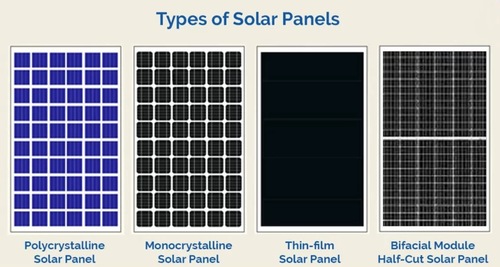
Monocrystalline Solar Panels: Sleek and Black
Monocrystalline panels are known for their deep black color. This is because the cells are made from a single, pure silicon crystal that interacts with light in a way that creates a uniform, dark appearance.
While the cells themselves are black, the back sheet and frame of the panels can come in different colors like black, white, or silver. If you want a seamless look, panels with a black back sheet and black frame will blend in best with most dark-colored roofs.
Polycrystalline Solar Panels: The Classic Blue
You can easily spot a polycrystalline panel by its bluish, speckled appearance. This blue hue comes from the way light reflects off the multiple silicon fragments used to create the cells.
These panels are most often paired with a silver back sheet and a silver frame, giving them a more traditional solar panel look.
Thin-Film Solar Panels: Low-Profile and Subtle
Thin-film panels are typically very slim and have a low-profile design. They can come in either black or blue, depending on what they’re made of. In some cases, they’re so thin that they’re barely noticeable from the ground.
The solar cells themselves are about 350 times thinner than the silicon wafers used in other panels. While some thin-film panels are adhesive and lie flat on the roof, others have a frame that can be up to 50 millimeters thick, making them similar in thickness to other solar panels.
What type of panel is right for your installation?
Deciding on the best solar panels for your home or business comes down to weighing the pros and cons of each type against your specific needs and goals.
Monocrystalline vs. Polycrystalline: A Matter of Space and Budget
- Monocrystalline panels are the top choice if you have limited roof space but want to maximize your long-term energy savings. They are highly efficient, which means you’ll generate more power per panel and get the most out of every square foot.
- Polycrystalline panels are a great option if you have plenty of roof space and a tighter upfront budget. While they are slightly less efficient, their lower cost can save you money on the initial installation.
Thin-Film Panels: For Unique Projects
Thin-film panels are best suited for specific situations. They are a popular choice for portable systems, such as on an RV or a boat, due to their lightweight and flexible nature. Businesses with large, flat commercial roofs also often choose them. Since these buildings have a lot of space, they can afford to use less efficient panels and still generate all the power they need, without worrying about the added weight of heavier panels.
Go solar with us confidently
SolarEarth is a leading online solar panel retailer. We connect you with information regarding your solar energy requirements in your area. We provide you with custom solar quotes tailored to your needs.


