
Thanks to abundant sunshine year-round, India is quickly becoming a leader in the global renewable energy sector. One key player in this shift is rooftop solar, which is completely changing how we generate and use electricity.
Rooftop solar systems are not only turning homes and businesses into their own power plants, but they’re also helping India meet its ambitious renewable energy goals.
This guide will cover everything you need to know, from the current state of rooftop solar in India to its benefits, challenges, and the government’s role. Whether you’re a homeowner, business owner, or policymaker, you’ll find all the essential information right here.
What is Rooftop Solar in India?
Installing rooftop solar in India means putting solar panels on the roofs of buildings, like your home, a local business, a factory, or even a government office. These systems capture the sun’s energy to create electricity, offering a clean and renewable alternative to traditional power sources.
The Growing Demand for Rooftop Solar in India
In recent years, more and more people in India have started installing rooftop solar. This surge is happening for a few key reasons: people are more aware of the environment, the government is offering incentives, and electricity bills are getting more expensive.
As India continues its push for renewable energy, rooftop solar is proving to be one of the most practical and appealing options for both homes and businesses.
In fact, India added a whopping 23.8 GW of new solar power in the fiscal year 2025. That’s a 58.5% jump from the previous year, thanks to large-scale projects, new rooftop installations from the PM Surya Ghar: Muft Bijli Yojana program, and other off-grid solutions.
As of early 2025, Western India is leading the charge in solar installations, accounting for a massive 59% of the total. The Southern region follows at 21%, with the North at 14%, Central at 4%, East at 2%, and the Northeast at 0.005%.
These efforts are part of a larger, ambitious push: projections suggest India’s solar capacity could double to 30 GW in 2025 alone. This is a critical step toward the country’s goal of reaching 500 GW of renewable energy by 2030.
However, the path isn’t without its obstacles. Progress could be affected by challenges like land disputes and financial hurdles faced by some state-owned power companies. Overcoming these issues will be key to ensuring India’s sustained growth in the renewable energy sector.
Advantages of Rooftop Solar in India

- Lower Electricity Bills: Switching to solar can save you a lot of money. For example, a 5kW system can produce about 600 units of power each month, potentially saving you around ₹4,200 on your monthly electricity bill.
- A Greener Planet: Solar power is clean and renewable. By using it, you’re helping to reduce greenhouse gases, fight climate change, and contribute to a healthier environment.
- Power Independence: When you generate your own electricity, you rely less on the traditional power grid. This means more energy security and fewer worries about power outages.
- Government Support: The government offers great incentives to make solar more affordable. Programs like the Pradhan Mantri Surya Ghar Muft Bijli Yojana provide subsidies and financial help to get you started.
- Increased Home Value: A home with solar panels is more energy-efficient, and this often increases its market value.
- Stronger Power Grids: Rooftop solar helps stabilize the main power grid by lowering transmission losses and improving how power is distributed.
- National Sustainability: By installing rooftop solar, you’re directly helping India reach its ambitious goal of generating 500 GW of renewable energy by 2030.
Rooftop Solar India: Market Segments
Who is Adopting Rooftop Solar?
- Homeowners: A big part of the growth in residential solar is thanks to government programs like the PM Surya Ghar: Muft Bijli Yojana. This initiative offers subsidies and makes it easier for homeowners to get solar panels installed.
- Businesses: Shops, malls, and office buildings are switching to rooftop solar to lower their operating costs and show their commitment to sustainability.
- Factories and Industries: Since industrial facilities use the most electricity, they see rooftop solar as a smart, long-term investment that provides significant savings.
- Schools and Government Offices: More and more educational and government institutions are installing solar panels to cut costs and set an example for environmental responsibility.
Key Components of a Rooftop Solar System
Considering the chief components are vital for anyone interested in rooftop solar in India:
Solar Panels: Capture sunlight and convert it into direct current (DC).
Inverter: Converts DC into alternating current (AC), which powers appliances.
Mounting Structures: Hold the panels at the right angle for maximum sunlight exposure.
Batteries (optional): Store excess energy for use during non-sunny hours.
Net Meter: Measures the energy consumed from and supplied to the grid.
Indian Government’s Initiatives Supporting Rooftop Solar in India
Key Government Initiatives
The Indian government is a major driver of the rooftop solar boom, with several key initiatives designed to make solar power more accessible and affordable.
-
PM Surya Ghar Yojana:
Launched in February 2024, this ambitious program aims to equip 10 million households with solar power by 2027. It offers generous subsidies: up to ₹30,000 for systems under 2 kW and up to ₹78,000 for systems 3 kW or larger. As a bonus, homeowners can get up to 300 units of free electricity each month, which could save them around ₹15,000 a year!
-
PM Kusum Scheme:
This program, officially called Pradhan Mantri Kisan Urja Suraksha evam Utthaan Mahabhiyan, focuses on helping farmers. It encourages the installation of solar pumps and small solar power plants, helping farmers reduce their reliance on expensive diesel fuel and unreliable grid electricity. This initiative promotes more sustainable farming practices across the country.
-
Grid-Connected Rooftop Solar Programme (MNRE Phase II):
Managed by the Ministry of New and Renewable Energy (MNRE), this program’s goal is to reach 40 GW of rooftop solar capacity by March 2026. It provides subsidies for residential installations and supports state-level electricity companies in their efforts to promote solar adoption.
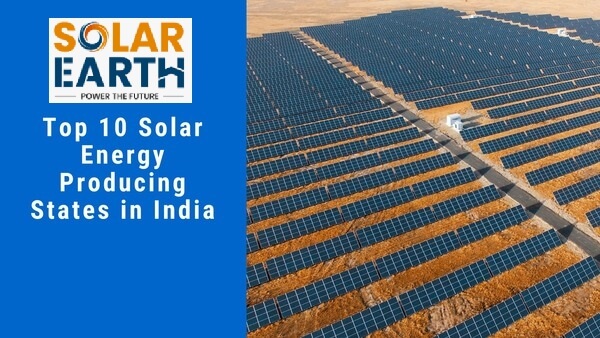
Top States Leading in Rooftop Solar in India
Here’s a look at the states leading India’s rooftop solar revolution.
- Gujarat, India
- Installed Capacity: Around 4,984 MW as of January 2025.
- Why It’s a Leader: Thanks to initiatives like the Surya Gujarat scheme, the state is a powerhouse in residential solar. Gujarat accounts for over half of all rooftop solar installations in Western India, a testament to strong government policies and high public participation.
- Maharashtra, India
- Installed Capacity: Around 3,034 MW.
- Why It’s a Leader: Urban centers like Mumbai and Pune are driving Maharashtra to the number two spot. The state’s commercial and industrial sectors have been key to this significant growth.
- Rajasthan, India
- Installed Capacity: Around 1,483 MW.
- Why It’s a Leader: With its vast deserts and intense sunlight, Rajasthan is a natural fit for solar power. In addition to rooftop installations, the state is home to massive projects like the Bhadla Solar Park, one of the largest in the world.
- Tamil Nadu, India
- Installed Capacity: Around 1,374 MW.
- Why It’s a Leader: Tamil Nadu has a balanced approach to renewable energy, focusing on both solar and wind power. The state’s effective policies have encouraged widespread adoption across both homes and businesses.
- Karnataka, India
- Installed Capacity: Around 1,098 MW.
- Why It’s a Leader: Karnataka has built a robust solar infrastructure, including both large-scale solar farms and smaller rooftop projects. Its commitment to renewable energy is clear from the large number of projects across the state.
Financing Options for Rooftop Solar in India
How to Finance Your Rooftop Solar System?
Wondering how to pay for your new solar panels? Here are some of the best financing options available.
-
PM Surya Ghar: Muft Bijli Yojana (2024)
This major government scheme, launched in 2024, aims to get 1 crore (10 million) households set up with solar by 2027. It offers:
- Subsidies: You could get up to ₹78,000, depending on your system’s size.
- Free Electricity: The scheme provides up to 300 units of free electricity per month.
- Concessional Loans: You can also get low-interest loans from participating banks.
To apply, visit the official website: pmsuryaghar.gov.in.
-
Bank Financing Options
Many major banks offer special loans just for rooftop solar installations.
- State Bank of India (SBI): Their “Surya Ghar” loan scheme has interest rates starting at a competitive 8.25% per year.
- Bank of India (BOI): They offer loans up to ₹6 lakh for individuals and ₹100 lakh for housing societies. Interest rates start at just 7% per year, and there are no processing charges.
-
Non-Banking Financial Companies (NBFCs) and Specialized Lenders
For more flexible options, you can look into NBFCs and solar financing companies.
- Electronica Finance Limited: They provide loans for residential properties, MSMEs, and other institutions.
- Ecofy: Their loan interest rates range from 12% to 24%, based on your credit profile.
- Tata Power Solaroof: They partner with various financial institutions to offer loans with interest rates between 8.2% and 12% and tenures up to five years.
-
Integrating with Home Loans
Some lenders will let you add the cost of your solar system to your existing home or renovation loan. This can be a great option because you can often borrow up to 90% of the solar system’s cost and get a longer repayment period—sometimes up to 20 years, with competitive interest rates.
-
Eligibility and Application
To qualify for most of these financing options, you’ll generally need to meet a few key criteria:
- Property Ownership: You must legally own the property where the solar system will be installed.
- Good Credit Score: Lenders typically require a minimum CIBIL score of 670.
- Proof of Income: You’ll need to show you have a stable income to repay the loan.
With so many options, financing your solar system is more accessible than ever before.
Why Choose SolarEarth for Rooftop Solar in India?

When it comes to rooftop solar in India, we’re a name you can trust for efficient, affordable, and sustainable energy solutions. Here’s why so many customers choose us:
- Expertise and Experience: With years of experience, we’ve successfully completed countless rooftop solar projects for homes, businesses, and industrial clients all across India.
- Top-Quality Components: We only use the best materials—Tier-1 solar panels, high-efficiency inverters, and durable mounting structures—to ensure your system performs at its best for years to come.
- Customized Solutions: Your rooftop is unique, and your solar system should be, too. We’ll design a custom solution that fits your specific energy needs, rooftop space, and budget, helping you maximize both your savings and your positive environmental impact.
- Hassle-Free Installation: We handle everything from the initial site survey and design to getting government approvals and setting up net metering. Our goal is to make the entire process as smooth as possible with minimal disruption to your daily life.
- Clear Pricing & Financial Help: Our pricing is straightforward and cost-effective. We can also help you with subsidy claims and connect you with our banking and NBFC partners to make your solar journey more affordable.
- Ongoing Support and Monitoring: Our job doesn’t end after installation. You’ll get real-time performance monitoring and fast customer support to keep your system running perfectly.
- Commitment to Sustainability: We’re not just installing solar panels; we’re helping India move toward clean energy and building a greener planet, one rooftop at a time.
Future of Rooftop Solar in India: The Smooth Road Ahead
The Promising Future of Rooftop Solar in India
The future of rooftop solar in India is looking incredibly bright. The country is working hard to meet its ambitious renewable energy target of 500 GW by 2030, with solar power expected to contribute a massive 280 GW of that total.
Rooftop solar is set to be a key player in reaching this goal, especially with initiatives like the PM Surya Ghar: Muft Bijli Yojana, which alone aims to add 30 GW of new capacity from residential rooftops.
As of January 2025, rooftop solar accounts for only 16.28 GW of India’s total solar capacity of 100.33 GW. This shows just how much untapped potential there is for growth.
Fortunately, solar power is more accessible than ever before. With falling costs, new technology, and flexible financing options, it’s becoming a practical choice for both homes and businesses. While certain states are leading the charge, there are still challenges to overcome, such as making sure policies are implemented smoothly and addressing the financial health of electricity distribution companies (DISCOMs).
The future is clear: rooftop solar is no longer just a trend. It’s becoming a nationwide movement for energy independence and a key part of climate resilience. For individuals and organizations, adopting rooftop solar isn’t just an opportunity—it’s a necessary step toward a sustainable and self-sufficient future.
Final Conclusion :
The rooftop solar landscape in India is changing fast, thanks to ambitious government initiatives like the PM Surya Ghar: Muft Bijli Yojana. This program aims to give 10 million households solar power and up to 300 units of free electricity every month.
This is a huge step toward reaching India’s goal of 500 GW of renewable energy by 2030, with solar power expected to contribute 280 GW of that total.
Despite challenges with policy and the financial health of power companies, the momentum for rooftop solar is strong. Government incentives and streamlined processes are making it easier for people to switch to clean energy, which helps build a cleaner, more sustainable future for the nation.
Now is the perfect time to invest in rooftop solar. By making the switch, you not only help the country meet its energy goals but also enjoy lower electricity bills and greater energy independence.
To get started, visit the official portal to apply for subsidies and learn more about the process. Join the solar revolution and be a part of India’s energy future!
Frequently Asked Questions (FAQs)
Q1: What’s the cost of a rooftop solar system in India?
The cost usually ranges from ₹45,000 to ₹65,000 per kW, depending on the system type, brand, and where you live.
Q2: Is rooftop solar worth it in India?
Absolutely. With government subsidies, net metering, and lower electricity bills, it’s a very cost-effective investment.
Q3: How much space do I need for a 1 kW solar system?
You’ll need about 100 square feet of rooftop space that gets direct sunlight.
Q4: Can I go off-grid with rooftop solar?
Yes, but you’ll need a battery backup system, which will increase the initial cost of the setup.
Q5: How long does it take to get my money back?
The payback period is typically 3 to 5 years, depending on how much energy you use and the subsidies you receive.


