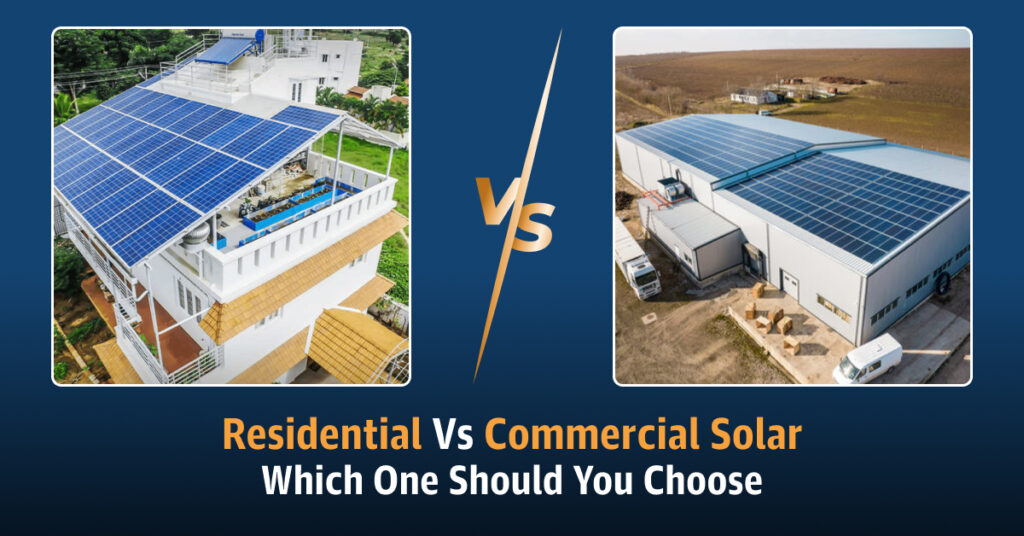
In recent years, investing in a residential rooftop solar system has become progressively available in India. As electricity tariffs rise and incentives expand, mid-cost systems, naturally in the 3 kW to 5 kW range, offer a sweet spot for numerous households who wish expressive savings and self-reliance without needing an enterprise-scale setup.
In this post, we’ll discover what a “mid-cost household solar” setup classically means today, estimated costs and financing, government subsidies and net-metering, how to choose components, and tips for maximising return on investment.
What is a “mid-cost” Solar System (and why that range)
A mid-cost solar system in India is generally an affordable yet efficient residential rooftop installation, commonly ranging from 2 kW to 5 kW in capacity. This size is well-suited for a medium-sized Indian household, providing sufficient power to operate essential appliances like fans, lights, a refrigerator, and potentially one air conditioner. For example, a popular 3 kW on-grid system typically costs between ₹1.2 lakh to ₹1.6 lakh before accounting for subsidies.
- For several average Indian households — say a 2–3 BHK home with typical loads like lights, fans, fridge, TV, and occasional washing machine or small AC — a 3 kW rooftop solar system is frequently enough.
- If your usage is higher (bigger house, more appliances, maybe frequent AC use), a 5 kW system becomes lucrative & giving more headroom and flexibility.
- These sizes strike a balance: you don’t overspend (as with very large systems), and yet get substantial benefits. Roof-space essential is moderate, and the payback period is realistic.
Hence, by “mid-cost household solar system”, I refer to 3 kW–5 kW grid-tied rooftop solar setups, systems reasonable for distinctive middle-class families but big sufficient to replace a decent portion of monthly electricity usage.
What Counts as a Mid-cost Solar Setup for a Home
A mid-cost household solar system in India frequently means a rooftop solar installation that is substantial plentiful to offset much of your monthly electricity usage for a family or a temperately sized home (2-4 BHK or more), but not an industrial or commercial-scale plant.
For most homes, this falls in the 3 kW to 5 kW capacity range. Systems of this size can securely handle daytime loads like lighting, fans, refrigerators, and moderate air-conditioning or heavy appliances, depending on usage.
Typical Costs and Price Range (2025)
Here’s an indication of what you can suppose to spend for a mid-size residential solar rooftop setup in India currently. Costs depend on brand, panel type, inverter/balance-of-system, mounting structure, and whether you comprise battery backup or not.
| System Capacity | Approximate Cost (before subsidy) | Typical After-Subsidy Cost / Notes* |
| 3 kW | ₹1,50,000 – ₹1,80,000 | After subsidy/netting can be reduced significantly, depending on the state and scheme. |
| 5 kW | ₹2,25,000 – ₹3,50,000 (or more depending) | Even for heavier load homes or high-use households, returns improve due to scale. |
*Estimated price includes panels, inverter, mounting structures, wiring and installation under standard on-grid systems. Prices can vary based on location, roof structure, panel efficacy, and other add-ons like hybrid/battery.
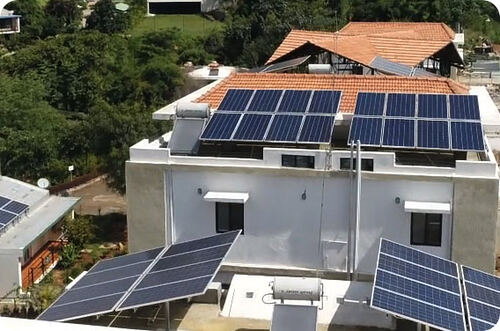
According to sources in 2025, the per-kW pre-subsidy cost for rooftop solar in India is classically in the range of ₹55,000–₹70,000 per kW for small to mid-residential systems.
Government support, subsidies and net-metering
One of the major enablers for mid-cost household solar in India is the sustenance mechanism from the government and state/environment programmes. Here’s a summary of what’s relevant in 2025:
Central scheme & central subsidy
- PM Surya Ghar: Muft Bijli Yojana endures to be a flagship subsidy scheme for residential rooftop solar, with subsidies obtainable for smaller capacities. Under convinced circumstances, households can grow a subsidy up to a cap for systems up to around 3 kW capacity.
- Additional scheme by Ministry of New and Renewable Energy (MNRE) via its Rooftop Solar Programme (Phase II) cares for residential rooftop installations, with subsidies/benefits for minor capacity systems, depending on eligibility and local DISCOM regulations.
Net-metering and state-level support
- Net-metering is a decisive benefit: surplus electricity produced by your rooftop system during topmost sunlight hours can be fed back to the grid, and you get credits or offset billing from your local distribution company (DISCOM). This helps decrease payback time and upsurges the financial lure of investing in solar.
- Some states deliver further subsidies or state-level incentives. For example, some states’ energy utilities offer extra local subsidies, and state-level policies may offer further support on top of the central subsidy. Potential buyers should check with their local DISCOM in their city/state about state-level subsidies or incentives.
Subsidy impact on net cost
With the subsidy sustenance on a minor system (e.g. 3 kW), the net cost after subsidy can drop meaningfully, making mid-cost systems manageable for several households. For example, estimates suggest that a 3 kW system that costs upfront ~ ₹1.8 lakh can drop by a noteworthy portion via subsidy in eligible zones.
What You Get — Benefits and Real-World Value
Monthly Savings & Payback Period
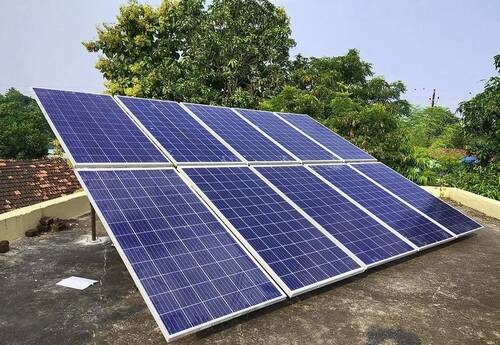
- Countless sources recommend that for homes with reasonable sun exposure, a 3 kW rooftop solar system can pay for itself in about 6–8 years through savings on electricity bills.
- After payback, you basically get “free electricity” (minus negligible maintenance) for the lifetime of the solar panels — often 20–25 years or more.
- Specially attractive for households with moderate to high electricity consumption (fans, fridge, lights, maybe a few appliances), because each unit produced decreases the purchase from the grid.
Suitable Roof & House Types
- Mid-size systems (3–5 kW) naturally require modest rooftop space, usual 2–3 BHK houses with a flat or sloped roof are fairly appropriate.
- Grid-tied (on-grid) systems work well if you have a reliable grid supply and just want to cut down your electricity bills. No prerequisite for a battery if the grid is stable, which keeps costs lower.
Flexibility — Scale Up or Add Later (if needed)
- If your load rises (e.g. you add an AC, or more appliances), mid-cost systems permit flexibility: you can upgrade later, or add more panels/ capacity — depending on roof space and grid/net-metering approvals.
- Some homeowners desire hybrid/off-grid setups (with battery) — but that adds a sizable cost. Numerous on-grid mid-cost setups offer the best balance of savings + affordability.
What to Check / Keep in Mind When Installing
When you propose to install a mid-cost rooftop solar system, these factors can make a big alteration in long-term satisfaction and savings:
- Quality of components — panels (mono- vs poly-crystalline), inverter reliability, mounting, wiring — cheap components may lower upfront cost but degrade performance or lifespan.
- Roof condition & orientation / sunlight exposure — shading, amount of sunny hours, tilt/angle: rooftops that get full sun for 5–6 hours daily make solar worth it.
- Net-metering / grid connectivity — for on-grid home systems, safeguard your local power distribution company (DISCOM) that cares about net-metering and has clear policies for rooftop solar.
- Subsidy eligibility and paperwork — check that the installer/vendor is empanelled for the subsidy scheme (e.g. under PM Surya Ghar), and confirm all documentation (electricity bill, Aadhaar, bank account, etc.) is in order.
- Avoid oversizing unnecessarily — installing a much bigger system than desired increases cost and may not give balanced benefits.
- Maintenance & warranty — check for warranty on panels, inverters, workmanship; confirm periodic cleaning and inspections (particularly after monsoons / dust storms).
Is Mid-Cost Solar Right for You? — A Quick Decision Flow
| Your situation… | Mid-cost rooftop solar (3–5 kW) is a good fit if… |
| Moderate monthly electricity bill (e.g. lights + fridge + fans + occasional washing machine/AC) | You want to cut monthly bills significantly without a huge upfront investment. |
| You own a house with a rooftop (flat or sloped), with good sun exposure, and limited surplus space | Mid-cost system balances space, cost, and output well. |
| You get regular grid supply but monthly bills are rising | On-grid solar helps reduce dependence on the grid, especially during peak summer usage. |
| You are eligible for home-solar subsidies under central/state schemes | Subsidy can bring down cost to “affordable-investment + quick payback” range. |
| You are not concerned with battery backup / off-grid for now | On-grid system saves money; battery can be considered later if needed. |
If most of the above apply — a mid-cost system is likely a strong, future-proof investment.
Choosing the Right Solar System: Factors and Component Decisions
When opting for a mid-cost household solar setup, convinced choices and trade-offs matter more than merely size. Here’s what to focus on:
- Your electricity consumption & load profile
- First, analyse your monthly electricity usage (units per month), top loads (A/C, heavy appliances), and roof area/orientation. A 3 kW system works well for reasonable consumption (typical 2-3 BHK homes with moderate loads), while a 5 kW system is suitable for larger or heavy-usage homes. Estimate daily generation versus your daytime demand.
- Panel type and efficiency
- Select good quality (Tier-1) solar PV panels. Monocrystalline panels offer higher competence (better for smaller roofs or higher output) while polycrystalline can be somewhat cheaper. Premium panels have healthier warranties and durability. Compare warranty, degradation rate, and efficiency for long-term benefit.
- Inverter and balance-of-system (BOS)
- The inverter is critical: string inverters are mutual and cost-effective; micro-inverters or higher-end inverters give improved performance/monitoring but cost more. Safeguard wiring, structure, earthing, mounting quality, and inspection are handled by a certified/empanelled installer.
- Installer/empanelled vendor and compliance
- Always select a vendor registered with the national rooftop solar portal or approved by local DISCOM/agency for subsidies. They will assist with subsidy processing, net-metering registration, permissions, and post-installation paperwork.
- Warranty, maintenance, and monitoring
- Panels often come with a 20-25 year warranty and performance assurance. Inverters have shorter warranty periods (8-10 years or more). Clean panels habitually (expressly in dusty climates), and monitor output. Consider a service or maintenance plan if obtainable.
- Battery or no battery (grid-tied vs hybrid/off-grid)
- For pure grid-tied systems (most urban/connected homes), you can skip the battery if the grid supply is reliable; this cuts costs suggestively. If power cuts or off-grid desires are recurrent, a hybrid or battery-backup system adds cost but offers autonomy.
Financial Returns, Savings and Payback
Investing in a mid-cost solar rooftop installation proposes numerous financial advantages:
- Reduced electricity bills: By generating noteworthy electricity during peak sun hours, you offset your monthly grid electricity usage. Over time, savings on your electricity bills can be significant.
- Net-metering benefits: During the day, when your system produces surplus electricity (beyond your usage), you can feed excess power back to the grid and get credits. These benefits decrease or offset your overall consumption bill, particularly during months when your generation surpasses usage slightly.
- Payback period: Depending on your electricity usage, consumption, local tariff rates, and subsidy support, various mid-size systems can pay for themselves in around 4–6 years (or even slightly less) via savings and net-metering benefits. The following years provide “free” or very low-cost electricity for the remainder of the system’s life (20+ years).
- Increase in property value and sustainability: A rooftop solar installation enhances the value of your property and decreases your carbon footprint, aligning with sustainability goals.
State-wise/Regional Considerations (Since you’re in Gujarat)
Since you’re based in Gujarat (Ahmedabad), a few regional-specific pointers matter:
- Gujarat has been among the leading states in rooftop solar deployment and often has supportive DISCOM policies and net-metering frameworks for rooftop solar installations. Several local vendors and installers in Gujarat are qualified with residential rooftop solar setups and state-level policies.
- Check with the local DISCOM (for Ahmedabad/Gujarat) for the latest net-metering regulations, approval procedure, and any state-level incentives beyond central subsidy.
- Also check the roof orientation (flat roof, south-facing etc.), local climatic conditions (Gujarat gets strong sunlight), and space obtainability to maximize panel output.
Step-by-step guide for choosing solar system for homes: How to get started
- Audit your electricity usage — check the last 12 months of electricity bills, average units per month, and peak usage times. Estimate how much you wish to offset.
- Choose capacity — based on usage and roof space, choose whether a 3 kW, 4 kW or 5 kW setup suits you (for many medium households, 3–5 kW is a decent mid-cost range).
- Shortlist empanelled vendors — select installers certified/approved by the national rooftop portal and local DISCOM, rather with experience in Gujarat.
- Get quotes and compare — ask for thorough quotations: panel brand, inverter, mounting, installation, warranty, subsidy claim, net-metering process. Equivalence warranties, effectiveness, and after-sales service.
- Apply for subsidy and permissions — submit application through the official rooftop solar portal (for central subsidy schemes/PM Surya Ghar, etc.), and local DISCOM for approval and net-metering.
- Installation and commissioning — let the installer fit the panels, inverter, wiring; confirm electrical safety, inspection and meter/connection formalities.
- Register for net-metering and monitoring — after installation, register for net-metering with DISCOM to feed surplus electricity to the grid. Monitor generation and electricity bills frequently.
- Maintenance — clean panels occasionally (specifically due to dust or monsoon), check inverter health, ensure no shading or dirt reduces output.
Conclusion
Mid-cost household solar systems in India, chiefly in the 3 kW to 5 kW range, are one of the most practical and value-for-money solutions for middle-class homes aiming to decrease electricity bills, attain energy independence, and contribute to sustainability.
For many Indian households in 2025, a mid-cost rooftop solar installation (3–5 kW) offers a nearly perfect trade-off: affordable upfront cost (expressly with subsidies), reasonable rooftop space requirement, substantial electricity savings, and long-term return on investment.
Particularly in a sunny state like Gujarat (where you are based — Ahmedabad), solar rooftops make a lot of sense: good sunlight, rising electricity demand, and incentive schemes that make the transition smooth.
If you choose to go ahead, do some homework: check your monthly electricity consumption, roof orientation & sunlight hours, local DISCOM’s net-metering rules, and take a steadfast, experienced vendor who uses good-quality panels and components. Treat it as a long-term investment: think 15–20 years, not just instant savings.
Going solar is not just about saving money; it’s about making your home more sustainable, independent, and environmentally friendly.
With the right planning, quality components, and leveraging government subsidies (like the PM Surya Ghar scheme / rooftop solar programme), the payback retro becomes attractive and long-term savings are noteworthy. If you’re in Gujarat (or any Indian state), now is a prodigious time to explore solar rooftop installation.