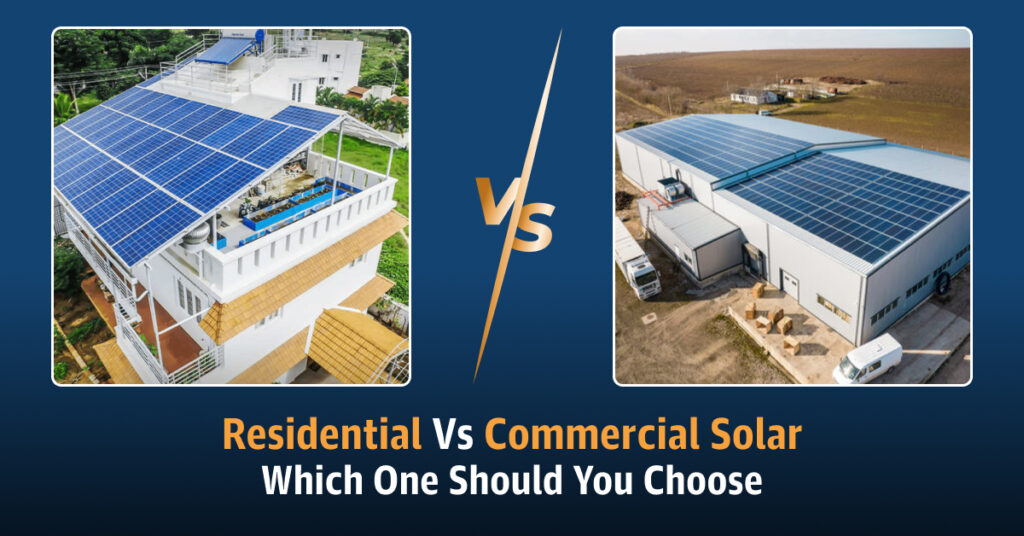
The increasing commercial solar demands in India in 2026 are shaping the country’s energy landscape faster than ever. It’s significant to highlight that commercial solar isn’t just a trend, it’s becoming a tactical investment for Indian businesses of all sizes.
Companies across manufacturing, IT, logistics, and retail are adopting solar to cut operational costs, reduce carbon footprints, and meet global sustainability expectations.
Overview of India’s Growing Commercial Solar Sector
India has already established itself as one of the fastest-growing solar markets worldwide. As the country moves closer to its 500 GW renewable energy target, commercial and industrial (C&I) consumers will become key contributors to this growth.
Solar energy adoption in 2026 is expected to surpass previous records, and experts anticipate exponential increases due to advanced technologies, favourable policies, and rising electricity tariffs.
Commercial institutions are progressively turning to solar because it offers a consistent, predictable, and long-term energy solution, something the grid often struggles to deliver reliably.
Solar Market Evolution Leading Up
Over the last decade, solar energy prices in India have dropped by over 80%, making it one of the most reasonable power sources for businesses. Corporations beforehand hesitant about transitioning now see solar as a stable investment with speedy payback periods.
Key Factors Driving Demand
- Rising grid electricity tariffs
- Availability of cheaper, high-efficiency solar panels
- Government incentives and favourable policies
- Increase in ESG requirements for global compliance
- Corporate desire for energy independence
India’s Renewable Energy Vision for 2026
India’s Renewable Energy Vision is a determined strategy centred on achieving energy security, sustainability, and climate goals through an enormous shift towards non-fossil fuel sources.
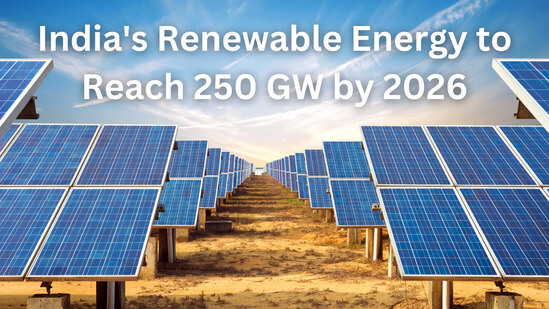
The key commitment is to achieve 500 GW of non-fossil fuel-based energy capacity by 2030, which includes noteworthy expansion in solar and wind power. This goal is part of India’s larger commitment to contest climate change, with a long-term aspiration to achieve Net Zero emissions by 2070 and a target of 1,800 GW of renewable energy capacity by 2047.
The vision is backed by major initiatives like the National Green Hydrogen Mission and schemes to promote decentralized power generation like rooftop solar.
India’s plan to achieve net-zero emissions by 2070 and meet interim green targets is pushing commercial sectors to adopt clean energy solutions urgently.
Government Policies & Incentives
India’s policy ecosystem is playing a major role in accelerating adoption.
Solar Park Schemes
These parks offer pre-approved land, grid access, and quicker project execution, reducing project risk for C&I consumers.
Corporate Net-Metering Policies
Net metering has enabled businesses to significantly reduce electricity bills by exporting excess power back to the grid.
Industrial Adoption Trends
Industries in Maharashtra, Gujarat, Tamil Nadu, and Karnataka are leading the solar transition. Many companies are adopting hybrid solar-wind projects to maximize energy generation.
Why Commercial Solar Demand Is Increasing in India in 2026?
The increasing demand for commercial solar in India is primarily driven by powerful economic and operational factors.
Businesses are adopting solar to drastically reduce their soaring operational costs, as solar power offers a fixed, lower cost per unit compared to volatile grid tariffs, with a quick payback period of typically 3-5 years.
Furthermore, solar installations provide energy independence and reliability, safeguarding critical operations from frequent power cuts and grid instability.
Lastly, government support through accelerated depreciation and net metering policies, coupled with growing corporate commitment to ESG (Environmental, Social, and Governance) goals, makes solar a financially and reputationally smart investment for the commercial and industrial sector.
Cost Efficiency & Reduction in Solar Prices
Solar power remains the most economical energy option. Falling module prices and increased domestic manufacturing have made solar more accessible.
Energy Independence for Businesses
Solar systems help businesses avoid reliance on unstable grid supply and diesel generators, which are expensive and polluting.
Rise of ESG & Sustainability Reporting
Companies aiming for global market presence are required to show sustainability progress, making solar energy a natural choice.
Technological Innovations Reshaping Solar in 2026
Technology is one of the strongest forces behind the rising adoption of commercial solar solutions across India. As we move into 2026, revolution is making solar energy smarter, more well-organized, and easier to manage.
These advancements not only reduce operational costs for businesses but also safeguard long-term performance and higher reliability.
AI-Enabled Solar Analytics
Artificial intelligence is transforming the way commercial solar plants operate. Many businesses now rely on AI-based monitoring systems to:
- Predict energy generation patterns
- Detect faults in advance
- Optimize real-time performance
- Reduce downtime and maintenance costs
AI tools help companies make data-driven decisions, ensuring that every panel performs at its highest efficiency. This is particularly useful for large-scale manufacturing units and industrial parks with extensive rooftop or ground-mounted installations.
Solar-plus-Storage Solutions
Battery energy storage systems (BESS) are becoming increasingly affordable in India, and by 2026, they’re expected to become mainstream in commercial applications. Solar-plus-storage systems offer:
- Stable power supply during outages
- Peak load shifting
- Improved grid independence
- Enhanced operational continuity
This is vital for sectors such as IT, pharma, and logistics, where continuous power is non-negotiable.
High-Efficiency Panels & Bifacial Modules
New-generation solar modules like TOPCon, HJT, and bifacial panels are taking over the Indian market. These panels deliver more power in a limited space, making them perfect for commercial rooftops.
Benefits include:
- Higher efficiency
- Lower Levelized Cost of Energy (LCOE)
- Better performance in low-light conditions
- Increased durability
These technologies significantly support the increasing commercial solar demands in India by 2026 as businesses seek faster ROI and better long-term performance.
Major Commercial Sectors Switching to Solar Energy

Different commercial and industrial sectors in India are adopting solar energy at unprecedented rates. Many companies now view solar as more than an energy source; it’s a competitive advantage.
Manufacturing & Industrial Estates
Manufacturing companies consume massive amounts of power. With rising electricity tariffs, solar energy has become a strategic investment to control production costs.
Advantages include:
- Cheaper electricity
- Improved sustainability ratings
- Better compliance with green manufacturing norms
Industrial hubs in Bhiwandi, Surat, Chennai, and Pune are leading adopters of solar rooftop and ground-mounted systems.
IT Parks & Commercial Buildings
Large IT campuses and office complexes require steady and reliable power. Solar systems help them reduce operational expenses while boosting green credentials.
Many large IT parks are already achieving up to 40–60% of their power needs from solar.
Warehousing & Logistics Parks
Warehouses have plentiful rooftop space, making them ideal for solar installations. With India’s booming e-commerce sector, solar energy offers:
- Low operating costs
- Energy security
- Quick payback periods
Large companies are even integrating solar in-built spaces into new warehouse designs.
Challenges Facing Commercial Solar Expansion
While growth is strong, the commercial solar industry still faces a few hurdles.
Grid Integration & EV Infrastructure
As EV adoption grows, commercial establishments need stronger grid support. Integrating solar-powered EV charging stations is still in the early stages.
Financing Barriers & High Upfront Costs
Although solar costs have dropped significantly, initial investments can still be challenging for MSMEs. However, new financing models, like OPEX and green loans, are helping overcome this issue.
Future Market Predictions for India’s Solar Sector in 2026
Looking ahead, several exciting trends will shape the commercial solar market.
Expected Solar Capacity Milestones
India is projected to cross 30–35 GW of C&I solar installations by 2026, driven by the manufacturing and logistics sectors.
Growth in Rooftop vs Ground-Mounted Installations
Rooftop systems will see higher adoption due to limited land availability and favourable net-metering rules.
Trends in Corporate Renewable Power Purchase Agreements
Long-term PPAs are becoming increasingly popular as businesses lock in fixed energy rates for 15–20 years.
Case Studies of Commercial Solar Success Stories
Large Enterprises
Several corporations like Tata, Mahindra, and Reliance are leading solar adoption by powering entire campuses with renewable energy.
MSMEs Adopting Affordable Solar Models
Small businesses in the textile, food processing, and packaging industries are turning to OPEX models to access solar with zero upfront cost.
How Businesses Can Prepare for Solar Integration in 2026
Energy Audits & Feasibility Studies
Before installation, an energy audit helps determine the right system size and expected savings.
Choosing the Right EPC Partner
Businesses must select an experienced EPC company with:
- Proven track record
- Advanced installation capabilities
- Post-installation support
A reliable partner ensures safe, long-lasting, and efficient solar systems.
FAQs About Increasing Commercial Solar Demands in India in 2026
-
Why is commercial solar demand increasing in India in 2026?
Rising power costs, sustainability expectations, and improved technologies are key drivers.
-
Are solar systems cost-effective for businesses?
Yes! Solar provides long-term savings and reduces reliance on grid power.
-
What sectors benefit the most from solar power?
Manufacturing, IT parks, logistics centres, and commercial buildings benefit the most.
-
Can small businesses install solar?
Absolutely. Flexible financing models like OPEX allow MSMEs to adopt solar without upfront investment.
-
Is solar energy reliable for commercial use?
With storage systems and improved panel efficiency, solar is now among the most reliable energy sources.
-
How long does a commercial solar system last?
Most systems last 25–30 years with proper maintenance.
In Conclusion :
The increasing commercial solar demands in India in 2026 highlight a major shift toward renewable energy across industries. Businesses are recognizing the power of solar to reduce costs, enhance sustainability, and secure long-term energy independence.
With government support, innovative technologies, and reasonable financing, the commercial solar sector will endure to grow rapidly.