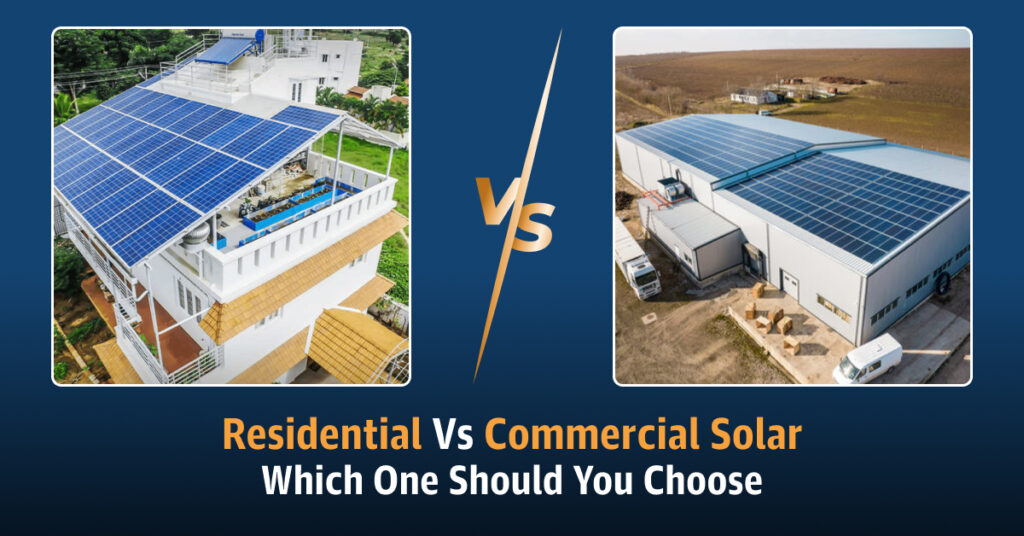
Ahmedabad, with its ample sunshine and supportive government policies, has emerged as a leader in rooftop solar adoption in India. Solar rooftop companies in the city play a pivotal role in this green energy revolution, offering tailored solutions to a diverse clientele, from individual homeowners to large industrial players.
While the core principle of converting sunlight into electricity remains the same, the operational approach for each client segment is distinctly different, addressing their unique needs and challenges.
Here’s a breakdown of how a typical solar rooftop company in Ahmedabad operates for various clients:
Residential Clients: The Homeowner’s Journey to Go Solar
For homeowners, the process is streamlined and heavily focused on government subsidies and ease of installation.
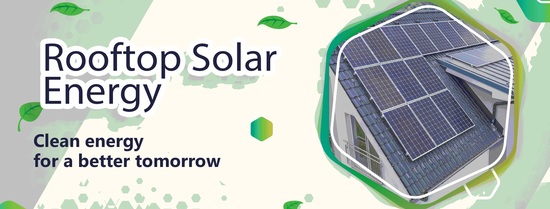
- Initial Consultation & Site Assessment: The journey begins with a free consultation. The solar company’s team assesses the homeowner’s electricity consumption patterns from their past bills to determine the ideal system size. A site visit is conducted to evaluate the rooftop’s suitability, checking its size, orientation (a south-facing roof is ideal), and structural integrity, as well as any potential shading from surrounding buildings or trees.
- Customized Design & Proposal: Based on the assessment, the company designs a customized solar system, including the type of panels (e.g., monocrystalline for higher efficiency) and inverter. A detailed proposal is then presented, outlining the system capacity, estimated cost, and potential savings on electricity bills.
- Handling Paperwork & Subsidies: This is a crucial step for residential clients. Solar companies in Ahmedabad are well-versed in navigating the complex paperwork for government schemes like the PM Surya Ghar Muft Bijli Yojana. They assist with the application process, from obtaining a No Objection Certificate (NOC) from the DISCOM (Distribution Company) to applying for the net meter and ensuring the subsidy is disbursed directly into the homeowner’s bank account.
- Installation & Commissioning: Once all approvals are in place, the installation team gets to work. This typically takes 1 to 3 days, depending on the system size. After installation, a DISCOM official inspects and commissions the system, and a net meter is installed to track the electricity consumed from and exported to the grid.
- Post-Installation Support: The service doesn’t end with installation. Reputable companies offer ongoing maintenance and performance monitoring to ensure the system is operating at peak efficiency, maximizing the homeowner’s return on investment.
Commercial Clients: Optimizing Business Operations
For commercial establishments like offices, retail spaces, and educational institutions, solar companies focus on reducing operational costs and enhancing the brand’s sustainable image.
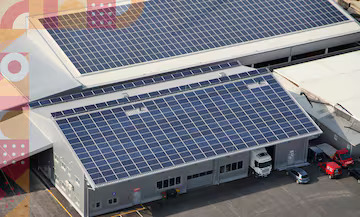
- Detailed Energy Audit: The process starts with a comprehensive energy audit to understand the business’s specific energy needs and consumption patterns. The company identifies peak consumption hours and tailors a solution to meet those demands, often with a grid-tied system.
- Engineered for Efficiency: Commercial projects often have higher energy demands, requiring larger, more robust systems. The solar company’s engineers design a system that not only fits the available rooftop space but also maximizes energy generation. They may propose elevated structures to avoid shading and ensure optimal panel tilt.
- Financial & Regulatory Guidance: Solar companies assist commercial clients in exploring financial benefits beyond electricity savings. This includes understanding potential tax benefits and depreciation advantages. They also manage all necessary permits and approvals from relevant authorities to ensure a smooth and compliant installation.
- Turnkey Solutions: Commercial clients often prefer a “turnkey” solution, where the solar company handles every aspect of the project, from initial design and procurement of high-quality components to installation, commissioning, and even post-installation maintenance. This allows businesses to focus on their core operations while the solar company manages the entire transition.
Industrial Clients: Large-Scale Power Solutions
Industrial clients, such as factories and warehouses, have the highest energy consumption and require large-scale, high-performance solar solutions.
- In-depth Feasibility Study: Before any design work begins, a detailed feasibility study is conducted. This goes beyond a simple site visit and includes a thorough analysis of the industry’s power requirements, load profiles, and the structural integrity of large industrial rooftops, which can be metallic or an RCC terrace.
- Tailored for High-Performance: Industrial systems are engineered for maximum power generation and longevity. Companies often use high-wattage panels and advanced inverters. They also need to account for specific industrial challenges like heavy dust and vibrations, proposing robust mounting structures and maintenance plans.
- Focus on ROI and Depreciation: For industries, the primary motivators are a rapid return on investment (ROI) and significant cost savings. Solar companies present a clear financial model, often highlighting a payback period of 3-5 years and the benefits of accelerated depreciation.
- Long-Term Operation & Maintenance (O&M): Given the scale and complexity of industrial solar plants, solar companies offer comprehensive O&M contracts. These services include regular cleaning of panels, performance monitoring, and quick response times to any technical issues, ensuring the plant operates at its peak for its entire lifespan, which can be 25 years or more.
In conclusion, solar rooftop companies in Ahmedabad don’t just sell and install solar panels; they act as strategic partners for their clients. By understanding the distinct needs of each segment, residential, commercial, and industrial. SolarEarth provides customized, end-to-end solutions that are not only technologically sound but also financially viable, making the switch to clean energy a seamless and rewarding experience for all.
FAQs on How Solar Rooftop Companies in Ahmedabad Operate for Various Clients
1. How do solar rooftop companies in Ahmedabad typically start a project?
Solar rooftop companies usually begin with a site inspection and energy requirement analysis. They assess roof size, structure, shading, electricity consumption, and client goals before recommending a suitable solar solution.
2. Do solar rooftop companies offer customized solutions for different clients?
Yes, solar companies in Ahmedabad provide customized systems for residential homes, commercial buildings, industries, housing societies, and institutions. Each system is designed based on energy usage patterns, budget, and available rooftop space.
3. How do solar companies handle residential rooftop installations?
For residential clients, companies focus on compact system design, aesthetics, and quick installation. They also assist homeowners with net metering approvals and subsidy documentation where applicable.
4. How are commercial and industrial solar rooftop projects managed?
Commercial and industrial projects involve detailed load analysis, ROI calculations, and compliance with safety standards. Solar companies ensure minimal business disruption during installation and prioritize high-capacity, efficient systems.
5. Do solar rooftop companies assist with government approvals and net metering?
Yes, most Ahmedabad-based solar companies manage the complete approval process, including DISCOM coordination, net metering applications, and compliance with Gujarat state solar policies.
6. How long does it take to install a solar rooftop system?
Installation timelines vary by project size. Residential systems typically take 7–15 days, while commercial or industrial projects may take 3–6 weeks, including approvals and commissioning.
7. What role do solar EPC companies play in rooftop projects?
Solar EPC (Engineering, Procurement, and Construction) companies handle the end-to-end execution—system design, equipment procurement, installation, testing, and final commissioning.
8. How do solar rooftop companies ensure quality and safety?
Companies use MNRE-approved components, certified installers, and follow industry safety standards. Structural integrity checks and electrical safety tests are conducted before system activation.
9. Do solar companies offer maintenance and after-sales support?
Yes, most solar rooftop companies in Ahmedabad provide AMC (Annual Maintenance Contracts), system monitoring, periodic cleaning, and prompt technical support to ensure optimal performance.
10. How do solar rooftop companies calculate savings and ROI for clients?
Savings are calculated based on current electricity tariffs, system capacity, and expected power generation. Companies provide ROI and payback period estimates before installation.
11. Are financing options available for solar rooftop installations?
Many solar companies offer financing options such as EMI plans, solar loans, CAPEX, and OPEX models to make solar installations affordable for different client segments.
12. How do housing societies and institutions benefit from solar rooftop services?
Solar companies design shared solar systems for housing societies and institutions to reduce common area electricity costs while ensuring fair power distribution and long-term savings.
13. How do solar rooftop companies comply with Gujarat’s solar policies?
Ahmedabad solar companies stay updated with Gujarat Energy Development Agency (GEDA) and MNRE guidelines to ensure regulatory compliance and client eligibility for incentives.
14. What factors influence the choice of solar rooftop system for clients?
Key factors include roof type, available area, electricity demand, budget, future expansion plans, and local weather conditions.
15. Why should clients choose an experienced solar rooftop company in Ahmedabad?
Experienced companies understand local regulations, climate conditions, and DISCOM processes, ensuring faster approvals, better system performance, and reliable long-term support.