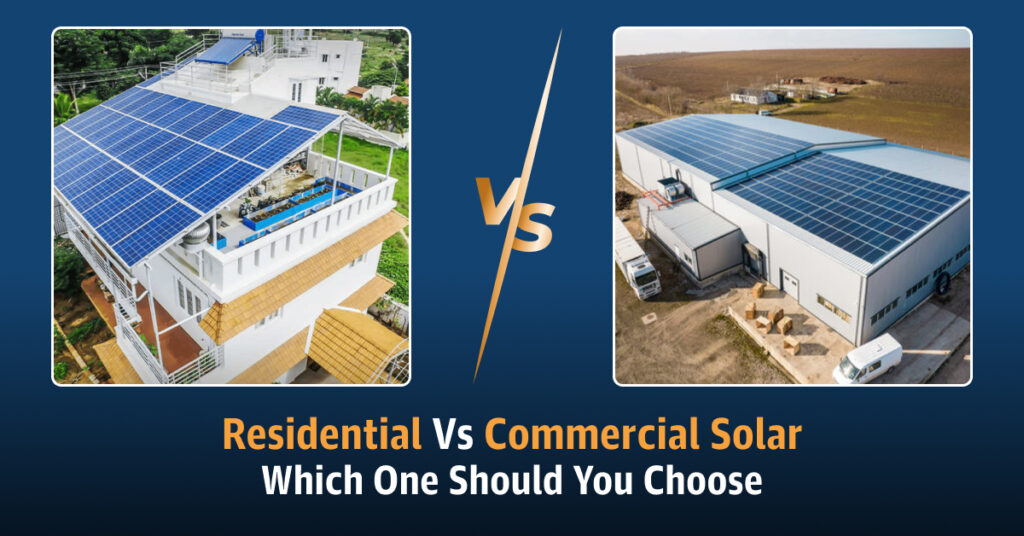
Did you know that India’s total installed solar capacity touched 102.57 GW by February 2025, including 78.47 GW from ground-mounted systems and 16.66 GW from rooftop solar installations?
With solar adoption accelerating across India, many businesses and property owners are now exploring solar energy for their operations. One of the first and most important questions they face is: Should I choose a ground-mounted solar system or a rooftop solar system?
Understanding the Basics: What’s the Difference?
Solar panels can be installed in two primary ways—on the ground or on the rooftop.
Ground-mounted solar panels are installed on frames fixed securely to the land, while rooftop solar systems are mounted directly on the roof of a building. Although both systems use the same solar technology, they differ significantly in terms of installation, maintenance, cost, and performance.
The main distinction between ground-mounted and rooftop solar panels is their location, on open land versus on your roof. This single factor influences system efficiency, maintenance ease, scalability, aesthetics, and overall cost.
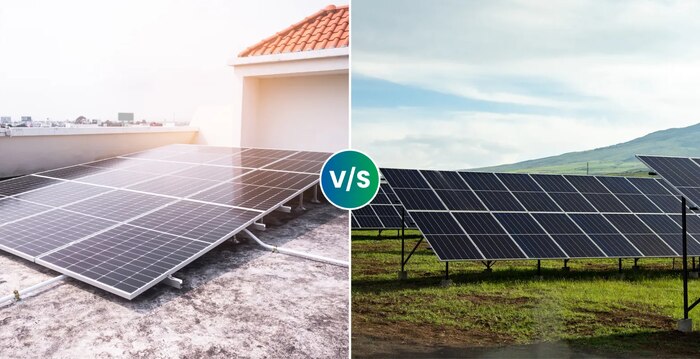
Let’s break down the pros and cons of each option to help you make an informed decision.
Pros and Cons of Ground-Mounted Solar Panels
Below are the key advantages and drawbacks of ground-mounted solar systems.
Benefits
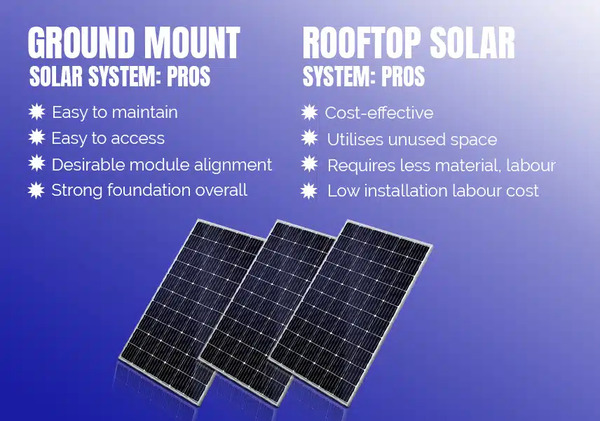
- Optimal Panel Positioning: Ground-mounted systems can be angled and oriented precisely for maximum sunlight exposure, regardless of roof direction or design.
- Improved Cooling and Airflow: Better ventilation keeps panels cooler, improving efficiency and increasing overall energy output.
- No Roof Stress or Damage: Since the system is installed on land, your roof remains untouched—eliminating concerns about drilling, leaks, or structural overload.
- Easy Maintenance Access: Panels installed at ground level are easier to clean, inspect, and repair, helping maintain peak performance and extend system life.
- Scalable Design: Ground-mounted systems can be expanded easily to accommodate growing energy demands, without space constraints.
Limitations
- Higher Installation Costs: Ground-mounted systems typically cost 10–30% more than rooftop installations due to additional materials, foundations, mounting structures, and cabling.
- Large Space Requirement: These systems need significant land area, making them unsuitable for properties with limited open space.
- Planning and Approval Delays: As they are considered new structures, ground-mounted systems may require more complex and time-consuming approvals.
- Visual Impact: If aesthetics are a priority, rooftop systems may be preferable, as ground-mounted panels can affect the visual appeal of open spaces.
- Higher Risk of Damage: Being accessible at ground level, these systems are more exposed to animals, harsh weather, and potential vandalism.
Pros and Cons of Rooftop Solar Panels
Here’s what you should consider before opting for rooftop solar installations.
Benefits
- Lower Installation Costs: Rooftop systems are more affordable since the roof already serves as the mounting structure, reducing material and labour costs.
- Efficient Use of Space: Rooftop solar makes use of unused roof areas, making it ideal for urban and space-constrained properties.
- Simpler Permitting: Approval processes are usually quicker, as no new structure is added to the property.
- Cleaner Appearance: Panels blend into the building design and maintain the overall aesthetics of your property.
- Roof Temperature Reduction: Rooftop panels can lower roof temperatures by up to 5°F, helping reduce cooling costs indoors.
Limitations
- Roof-Dependent Performance: Roof orientation, angle, shading, and available area can limit system size and efficiency.
- Higher Operating Temperatures: Restricted airflow can cause rooftop panels to run hotter, potentially reducing efficiency by 10–25% in hot climates.
- Maintenance Challenges: Cleaning and repairs can be difficult due to roof height or steep angles.
- Roof Repair Complications: If roof repairs or replacement are needed during the panel lifespan (25–30 years), the system must be dismantled and reinstalled—adding extra costs.
- Structural Constraints: Some roofs may need reinforcement to safely support the additional weight of solar panels.
Cost Comparison
According to Research in Energies (2020), rooftop solar systems show 2.9% higher capacity utilisation and up to 23.7% lower energy costs compared to ground-mounted systems.
That said, ground-mounted systems offer superior flexibility, better cooling, and easier maintenance. While the upfront cost is higher, they can deliver better long-term returns in locations with ample land availability.
5 Key Factors to Consider Before Choosing
The ideal solar solution depends on your property conditions and priorities.
- Available Space: Rooftop systems suit properties with limited land, while ground-mounted systems are ideal for larger plots.
- Roof Condition and Orientation: South-facing roofs in good condition are ideal. Older or poorly oriented roofs may favour ground installations.
- Local Climate: Ground-mounted systems can be adjusted to handle heavy winds, snowfall, or extreme weather more effectively.
- Local Regulations: Always check local guidelines and approval requirements before finalising your installation type.
- Budget: Rooftop solar systems are more budget-friendly upfront, while ground-mounted systems may offer higher efficiency over time.
Frequently Asked Questions (FAQs)
Which solar system is more efficient?
Ground-mounted systems are typically 7–15% more efficient than rooftop systems due to better airflow and optimal positioning.
Do ground-mounted panels last longer than rooftop panels?
Both systems generally last 25–30 years, but ground-mounted panels may have a slightly longer lifespan due to easier maintenance.
Do solar panels work during power outages?
Not by default. Battery storage or specialised inverters are required to supply power during grid outages.
Final Thoughts
Rooftop solar panels are cost-effective, space-saving, and ideal for urban properties looking to reduce electricity bills without altering land usage. Ground-mounted solar systems offer higher efficiency, easier maintenance, and flexible positioning—but require more land and higher upfront investment.
Both options are reliable and long-lasting. The right choice depends on your space availability, budget, and energy goals. Contact SolarEarth today for a personalised site assessment. Our solar experts will evaluate your property and help you choose the most efficient and cost-effective solar solution tailored to your needs and budget.