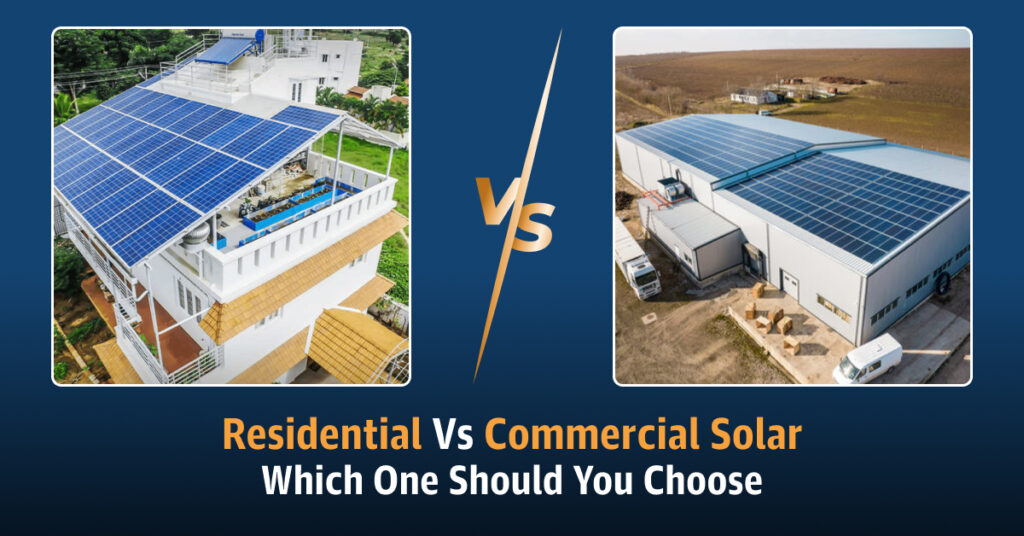
India is witnessing a quick shift toward renewable energy, and rooftop solar power is leading this transformation at the household level. With rising electricity costs, recurrent power cuts in some regions, and growing environmental awareness, more homeowners are turning to solar energy as a long-term solution.
The advantages of roof solar power in India for homeowners go far beyond saving money, they offer independence, sustainability, and future-ready living.
Rooftop solar systems permit homeowners to produce electricity directly from sunlight, using idle roof space efficiently. Thanks to India’s high solar potential, most regions receive plenty of sunlight throughout the year, making solar power a consistent option for residential use.
How Rooftop Solar Power Systems Work in India?
A rooftop solar system captures sunlight and converts it into usable electricity for household appliances. Any surplus electricity can be exported to the grid, depending on the system type.
Rooftop solar systems in India work by converting sunlight into electricity using photovoltaic (PV) panels installed on your roof. Here is a brief overview of the process:
- Generation: The solar panels capture sunlight and convert it into Direct Current (DC) electricity.
- Conversion: An inverter then converts this DC electricity into Alternating Current (AC), which is the standard power used by home appliances.
- Net Metering: The system is associated with the grid via a bi-directional meter (Net Meter). This meter records both the power you draw from the grid and the surplus solar power you export back to it.
- Billing: You are only billed for the “net” electricity consumed (Total Imports minus Total Exports). If you produce more than you use, the excess is often credited to your account for future use.
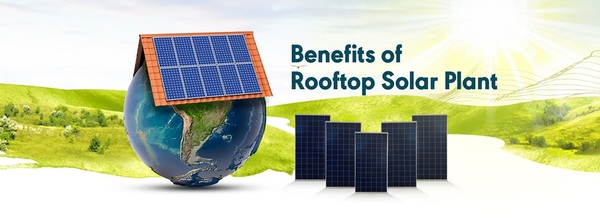
Main Components of a Rooftop Solar System
- Solar photovoltaic (PV) panels
- Inverter to convert DC to AC power
- Mounting structures
- Net meter (for grid-connected systems)
- Optional battery storage
Grid-Tied vs Off-Grid Rooftop Solar Systems
Here is a swift comparison between the two systems:
- Grid-Tied (On-Grid): These systems connect directly to the public electricity grid, allowing you to export excess power in exchange for credits (net metering). They are usually more affordable because they don’t need expensive batteries, but for safety reasons, they will shut down during a power outage.
- Off-Grid: These systems work self-sufficiently of the utility grid and rely on a battery bank to store power for use at night or during cloudy days. While they offer wide-ranging energy independence and work even during blackouts, they are meaningfully more expensive to install and maintain due to the cost of the batteries.
Most Indian homeowners desire grid-tied systems due to lower costs and higher efficiency.
Financial Benefits of Rooftop Solar Power for Indian Homeowners
The financial benefits of rooftop solar for Indian homeowners are substantial, often turning a monthly expense into a long-term asset.
- Drastically Reduced Bills: A properly sized system can cut your monthly electricity bills by 80% to 90%, protecting you from rising grid tariff rates.
- Government Subsidies: Under the PM Surya Ghar: Muft Bijli Yojana, homeowners can receive a central subsidy of up to ₹78,000 for systems up to 3 kW, meaningfully lowering the initial investment.
- Earn from Excess Power: Through Net Metering, any excess electricity you generate is sent back to the grid, earning you credits that adjust against your bill or even result in a payout from the DISCOM at the end of the year.
- High Return on Investment (ROI): With subsidies and bill savings, the typical payback period is just 3 to 5 years, after which you basically relish free electricity for the remaining 20+ years of the system’s lifespan.
Reduction in Monthly Electricity Bills
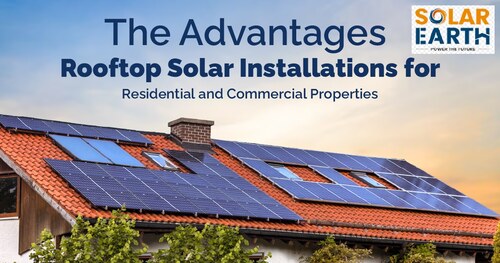
One of the chief motivations for adopting rooftop solar is the sharp reduction in electricity bills. A well-sized system can offset 70% to 100% of a household’s power consumption. Over time, this results in considerable savings, particularly as electricity tariffs continue to rise.
Net Metering and Long-Term Savings
Net metering permits homeowners to export excess electricity to the grid and receive credits. These credits can be used to offset electricity consumed at night or during low-sunlight periods. Over a 25-year lifespan, rooftop solar systems can save homeowners lakhs of rupees.
Government Subsidies and Incentives in India
Central Government Solar Subsidy Schemes
The Indian government actively endorses rooftop solar through subsidy programs under the Ministry of New and Renewable Energy (MNRE). Homeowners can obtain subsidies of up to 40% for smaller systems, meaningfully reducing upfront costs.
State-Level Benefits and Policies
Many states offer further incentives such as faster approvals, additional subsidies, and favourable net metering policies. These combined benefits make solar adoption more affordable than ever. For official guidelines, homeowners can refer to the MNRE website: https://mnre.gov.in
Energy Independence and Power Reliability through Rooftop Solar Power
Rooftop solar power offers a pathway to energy self-reliance, though the level of “independence” depends on the type of system you install.
Reducing Grid Dependence: By generating your own electricity, you significantly lower your reliance on external utility providers (DISCOMs), insulating your household from future tariff hikes and grid fluctuations.
Security Against Outages: To achieve true power reliability, a solar system must be paired with battery storage (Hybrid or Off-Grid systems). This safeguards you have a steadfast backup supply to keep important appliances running seamlessly during grid failures or load shedding, providing peace of mind when the public grid goes down.
Protection Against Power Cuts: Rooftop solar systems, especially those equipped with battery backup, ensure continuous power during outages. This is particularly valuable in areas with unstable grid supply.
Hedge Against Rising Electricity Tariffs : Electricity prices in India tend to upsurge over time. By generating your own power, you guard yourself from future tariff hikes and gain long-term energy security.
Environmental Advantages of Rooftop Solar Power in India
Adopting rooftop solar power is one of the most impactful steps Indian homeowners can take to subsidise a greener future.
Reduction in Carbon Footprint: By generating clean electricity, a distinctive residential solar system prevents tons of Carbon Dioxide ($CO_2$) from entering the atmosphere, directly combating climate change. Solar energy is clean and renewable. By installing rooftop solar, homeowners decrease dependence on fossil fuels, cutting carbon emissions and air pollution.
Decreased Reliance on Coal: Since a noteworthy portion of India’s grid power is still produced by burning coal, switching to solar reduces the demand for fossil fuels and the associated mining activities.
Water Conservation: Unlike thermal power plants, which consume massive quantities of water for cooling, solar photovoltaic panels require almost no water to produce electricity, helping to preserve India’s vital water resources.
Cleaner Air: Widespread solar adoption reduces the emission of harmful pollutants like sulfur dioxide and particulate matter, contributing to better air quality in our cities.
Contribution to India’s Renewable Goals : India aims to attain determined renewable energy targets. Every rooftop solar installation contributes to national sustainability goals while promoting responsible living.
Increased Property Value and Modern Appeal
Solar Homes as a Premium Asset
Homes equipped with solar power systems are often valued higher in the real estate market. Buyers see solar-powered homes as modern, cost-efficient, and future-ready, making them more attractive investments.
Low Maintenance and Long System Life
Durability of Solar Panels
Solar panels are designed to withstand harsh weather conditions, including heat, rain, and dust. With minimal maintenance such as periodic cleaning, systems can operate efficiently for 25 years or more.
Suitability of Rooftop Solar Across Indian Cities
The suitability of rooftop solar varies across Indian cities based on geographic location, weather patterns, and urban density.
- Sun-Drenched Regions: Cities in states like Gujarat (Ahmedabad), Rajasthan (Jaipur), and Madhya Pradesh (Indore) are highly suitable due to high solar irradiance and over 300 clear sunny days annually.
- Southern Potential: South Indian cities like Bengaluru and Chennai benefit from consistent sunlight throughout the year, though generation may dip slightly during the monsoon months.
- Urban Challenges: In dense metros like Mumbai and Delhi, high-rise buildings and air pollution (aerosols) can cause shading and dust accumulation, which may reduce panel efficiency by 10% to 30%.
- Flat-Style Living: For residents in cities where apartment living is the norm, Group Housing Society (GHS) models or elevated mounting structures are becoming popular solutions to overcome limited individual roof space.
- Northern/Hilly Areas: While solar is still viable in North Indian cities like Chandigarh or Dehradun, the shorter winter days and lower sun angles require precise panel tilting to maximize energy capture.
Solar Power in Urban and Semi-Urban Homes
Whether you live in a metro city or a smaller town, rooftop solar systems can be customized based on roof size, energy needs, and budget. India’s climate supports solar generation across most regions.
Common Myths About Rooftop Solar in India
- Myth: Solar doesn’t work during the monsoon
Fact: Panels generate electricity even in diffused sunlight. - Myth: Solar is too expensive
Fact: Subsidies and long-term savings make it cost-effective. - Myth: Maintenance is difficult
Fact: Solar systems require very little upkeep.
Despite the growing popularity of solar energy, several misconceptions often cause hesitation among Indian homeowners. Here are the most common myths debunked:
- Myth: Solar Panels Don’t Work on Cloudy or Rainy Days: Many believe solar is useless during the monsoon. In reality, panels use light (photons), not heat, to generate electricity. While output may drop to 10%–25%, they continue to function using diffused sunlight, and rain even helps by naturally cleaning off dust.
- Myth: Solar Power is Too Expensive for the Average Home: While the upfront cost was high a decade ago, prices have dropped by over 80%. With the current PM Surya Ghar subsidies and zero-interest financing options, most residential systems pay for themselves within 3 to 5 years.
- Myth: High Maintenance is Required: Solar panels have no moving parts, making them incredibly durable. For most Indian cities, the only maintenance needed is a simple water wash every 2 weeks to remove dust and bird droppings.
- Myth: Solar Panels Can Damage Your Roof: When installed by professionals, solar mounting structures do not cause leaks or structural damage. In fact, they act as a shield, protecting your roof from direct UV radiation and extreme heat.
- Myth: They Stop Working in Winter: Surprisingly, solar panels are actually more efficient in cooler temperatures. While winter days are shorter, the cold air improves the conductivity of the panels, often resulting in better performance per hour of sunlight compared to scorching summer days.
Frequently Asked Questions (FAQs)
-
Is rooftop solar suitable for small homes in India?
Yes, even small rooftops can support solar systems designed to meet limited power needs.
-
How long does it take to recover the investment cost?
Most homeowners recover costs within 4–6 years through savings and subsidies.
-
Can rooftop solar run all household appliances?
Yes, with proper system sizing, solar can power most or all household appliances.
-
What happens if I generate excess electricity?
Excess power is exported to the grid under net metering, earning credits.
-
Are rooftop solar systems safe?
Yes, when installed by certified professionals, they are extremely safe and reliable.
-
Do solar panels work during cloudy days?
Yes, although output is lower, panels still generate electricity in cloudy conditions.
In Conclusion :
The advantages of rooftop solar power in India for homeowners make it one of the smartest investments for modern living. From financial savings and government support to environmental protection and energy independence, rooftop solar offers long-term value that few alternatives can match.
As technology improves and costs continue to fall, now is the perfect time for Indian homeowners to embrace solar power and build a cleaner, more secure future.