
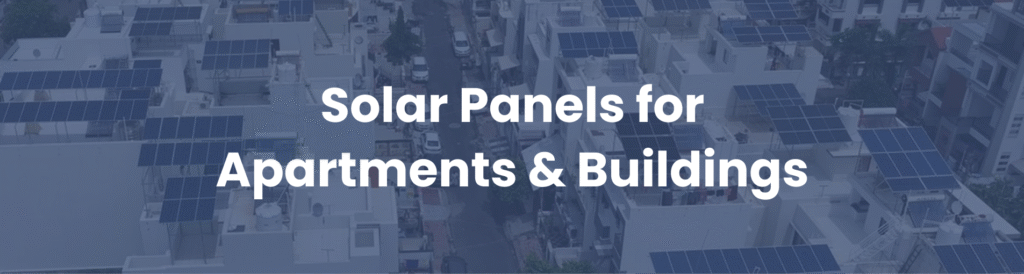
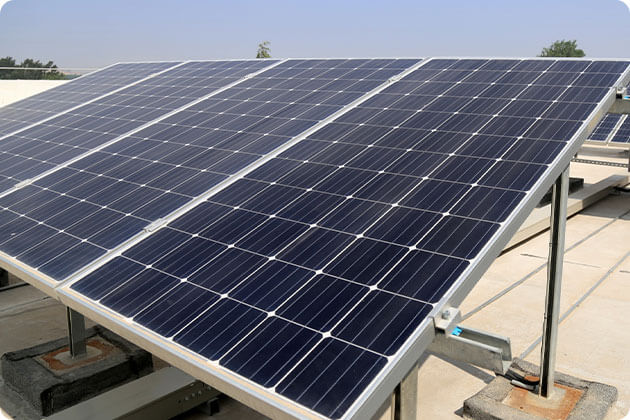
Solar panels for buildings and apartments are highly versatile and can be used in multiple ways. They are easy to install and do not rely heavily on the existing building infrastructure. Whether the structure is a high-rise or a low-rise home building, a solar panel system can be conveniently installed on the rooftop.
Solar PV systems designed for residential & commercial buildings offer a wide range of applications. These systems can be installed on both commercial and non-commercial buildings and apartments, regardless of their type, size, or overall structure.
The primary purpose of installing solar panels is to provide a reliable and sustainable power supply for the building. In addition to electricity generation, solar panels can also be used for solar water heating, ensuring a consistent supply of hot water based on usage requirements.
In some cases, solar systems are used for thermal heating to help regulate indoor temperatures, contributing to improved energy efficiency and maintaining a comfortable environment within the building.
Best Solar Panel System for Apartments & Buildings in Ahmedabad
Nowadays, the demand for solar panels in the market has increased significantly, highlighting the urgent need to shift from traditional energy sources to modern, sustainable technology. When solar panels are installed in apartments and buildings, they help individuals save a substantial amount of money on electricity expenses.
Solar panels are environmentally friendly and play an important role in environmental conservation by reducing pollution and carbon emissions. They offer a clean and renewable source of energy that supports a greener future.
For more information about our products and services, please feel free to contact us. We are a trusted Solar PV System dealer in Ahmedabad, Gujarat, providing complete solar solutions and related products at competitive and exclusive prices.
Three Ways Solar-Powered Buildings and Apartments Can Enhance Efficiency
There are 3 ways that solar-powered buildings enhance efficiency:
- Solar-powered buildings improve the competence of heating and cooling systems by up to 30% with proper HVAC system installation. Solar energy-efficient buildings can decrease the operating costs of solar water heaters by up to 90%.
- The use of Low-Emissivity (Low-e) Window Glazing can decrease the need for space cooling by approximately 40%.
- Employing energy-efficient lighting and appliances can decrease energy consumption in a solar building by 20-30%.
Six Reasons for Adopting Solar Energy Technologies in Buildings and Apartments:
Solar energy is applied in numerous devices, ranging from homes to agricultural and space technologies. However, in recent years, it has been progressively integrated into home or office buildings for numerous compelling reasons:
- Rising energy consumption.
- Environmental awareness.
- Addressing global climate change.
- Corporate social responsibility (CSR) benefits for corporate buildings.
- Attraction to cleaner, renewable energy.
- Enhanced property value and social appeal.
FAQs on Solar Panels for Apartments & Buildings
Yes, solar panels can be installed in apartment buildings. They are usually mounted on the rooftop or other available common areas. The electricity generated can be used for common facilities such as lifts, corridor lighting, water pumps, parking lights, and security systems.
The solar system is generally owned by the apartment association or housing society. In some cases, a third-party developer installs and maintains the system under a power purchase agreement (PPA).
Solar power is commonly used for common-area consumption. Individual apartments can also benefit if the system is designed with sub-meters or net metering, allowing energy credits to be distributed based on usage or contribution.
On average, 100 square feet of shadow-free rooftop space is required for every 1 kW of solar capacity. The exact requirement depends on panel efficiency and building design.
Yes, net metering is available in many states. It allows excess electricity generated by the solar system to be exported to the grid, reducing the overall electricity bill of the apartment complex.
The cost depends on system size, panel type, inverter, installation complexity, and location. For large apartment buildings, costs are lower per kW due to economies of scale. Government subsidies may also reduce the overall investment.
Yes, the Government of India offers subsidies for residential solar projects, including group housing societies, subject to eligibility and state DISCOM policies.
Savings depend on electricity consumption and system size. Typically, apartment buildings can reduce common-area electricity bills by 30% to 70% using solar power.
Solar panels require minimal maintenance. Periodic cleaning, inverter checks, and electrical inspections are usually sufficient. Most systems come with long-term warranties.
